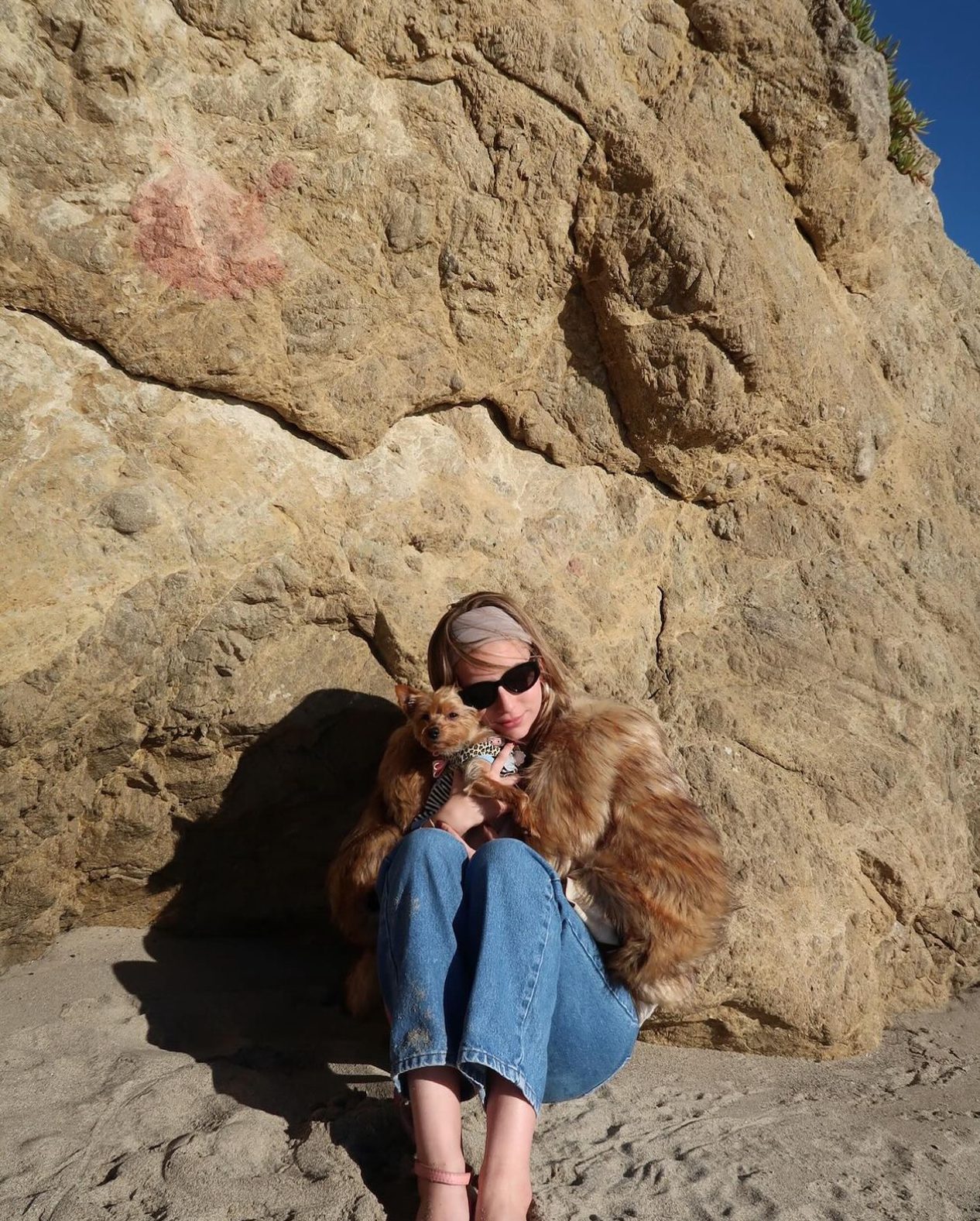

I love a dog in a sweater as much as the next person. My Yorkie, Scarlett, has a drawer dedicated to her wardrobe. But here’s the thing nobody talks about when we’re scrolling through Instagram feeds of pets in tiny outfits…pet fashion has the exact same sustainability problems as human fashion. Same synthetic materials, same disposable trends, same mountains of waste ending up in landfills.
The pet apparel market is booming. We’re talking about an industry that’s projected to hit over $7 billion globally by 2028, growing at about 5% annually. And just like fast fashion for humans, most of those cute dog bandanas and cat sweaters are made from the same petroleum-based polyester and nylon that’s wreaking havoc on the environment. The difference? We’re just starting to see sustainable alternatives emerge and some of them are actually pretty good.
What Makes Pet Fashion an Environmental Problem?
Here’s where it gets messy. According to research on textile production, polyester—which makes up the majority of pet clothing—requires about 70 million barrels of oil per year to produce globally. That’s for all polyester, not just pet stuff, but pet apparel is a growing slice of that pie. Every time we buy a $5 Halloween costume for our pup that gets worn once and tossed, we’re contributing to that demand.
The other issue? Durability. Or lack thereof. A lot of pet clothing is designed to be cheap and trendy, not long-lasting. Your dog outgrows that raincoat, it rips after three wears, or you just get bored of it. Where does it go? Most likely a landfill, where synthetic materials can take 200+ years to break down while releasing microplastics into soil and water.
And let’s not forget about washing. Every time you throw that polyester pet sweater in the washing machine, it sheds microplastic fibers, tiny plastic particles that get flushed into waterways and eventually make their way into oceans. Studies have found that a single synthetic garment can release up to 700,000 microplastic fibers in one wash. Your dog’s wardrobe is literally contributing to ocean pollution.
How I Accidentally Became a Dog Fashion Designer
When I first got Scarlett five years ago, I had a problem: she was too small for even XXS pet clothing. Yorkies get cold easily, and Scarlett needed something warm, but nothing fit. So I started making her clothes out of old sweatshirt sleeves and fabric scraps I had lying around. What started out of necessity just stuck. It was easier and cheaper than shopping for her, and obviously better for the planet since I was keeping textiles out of landfills.
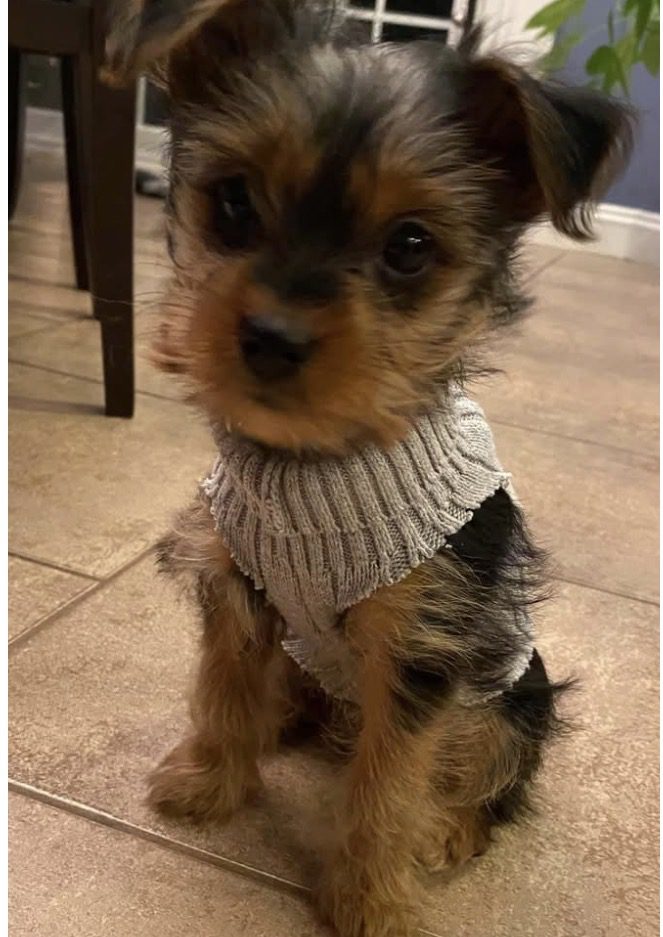
Now a lot of Scarlett’s wardrobe is DIY, old sweatshirt arms turned into sweaters, fabric scraps turned into bandanas. It’s really not complicated, and it keeps a ton of textile waste out of the trash.
The Brands Actually Trying to Fix This
So what’s the alternative if DIY isn’t your thing or your dog actually fits into standard sizes? Turns out, there are brands working on this. Although, I’ll admit it’s still a pretty small corner of the pet fashion world.
West Paw is making recycled dog coats and accessories from plastic bottles. Their Eco Pup line uses post-consumer recycled materials, and they’re one of the few pet brands that’s actually transparent about their supply chain. Plus, they have a “join the pack” recycling program where you can send back old West Paw products to be recycled into new ones.
P.L.A.Y. (Pet Lifestyle and You) uses eco-friendly materials including recycled PET fill in their beds and accessories. They’re also a certified B-Corp, which means they’ve met verified standards for social and environmental performance. Not perfect, but it’s something.
Wild One focuses on durable design that’s meant to last years, not seasons. Their harnesses and accessories use recycled materials, and the whole philosophy is about buying once and keeping it forever. Less consumption = less waste.
Max-Bone offers organic cotton options and natural fiber materials in their luxury pet wear line. Yes, it’s pricey, but the quality means you’re not replacing it every few months.
Wolf & Badger also carries a growing selection of brands creating sustainable dog wear, extending its commitment to ethical, small-batch, and responsibly made products beyond human fashion.
Fren takes a thoughtful, design-led approach to dog wear, focusing on high-quality materials, durability, and timeless aesthetics meant to last far beyond a single season. Their pieces are made with comfort and functionality in mind for dogs, while also reflecting a more conscious production model that avoids mass-market waste, proving that sustainability can be practical, stylish, and pet-friendly all at once.
The catch? These brands are more expensive than what you’ll find at a big box pet store. It could be $40-80 for a dog coat instead of $15. That’s a real barrier for a lot of pet owners, and I’m not going to pretend it isn’t.
Let’s Keep It Real: Scale Matters
Sustainable pet fashion is still a drop in the bucket. The vast majority of pet clothing sold is still cheap, synthetic, and disposable. These eco-friendly brands are doing good work, but they’re not moving the needle on the industry as a whole yet.
The bigger issue is that we’ve normalized treating pet clothing like fast fashion. Seasonal wardrobes for dogs. Throwaway Halloween costumes. Buying multiples because they’re cheap. Until the mainstream pet retail industry shifts away from that model, sustainable options will remain niche.
That said, every purchase is a vote for what you want to see more of. The more demand there is for sustainable pet products, the more infrastructure gets built to support it, the more competition drives prices down, and the more accessible these options become. It’s a slow process, but it’s how change happens.
What You Can Actually Do About It
If you want to make your pet’s wardrobe more sustainable, here are some realistic steps:
Raid your own closet first. Seriously. This is the easiest, cheapest, and most sustainable option. Old sweaters with stretched-out necks? The sleeves can become dog sweaters with minimal effort. Scarves work perfectly as bandanas or wraps. That t-shirt with the stain you’ll never wear again? Cut and tie it into a no-sew dog shirt. Before you buy anything new for your pet, look at what you already have that’s destined for donation or the trash anyway. You might be surprised at how much you can repurpose.
Start by auditing what you already have. If you’ve already bought pet clothing, check the tags. Is it mostly synthetic? How much of it actually gets worn versus sitting in a drawer? Be honest about what your pet needs versus what seemed cute at the moment.
Prioritize durability over trendiness. Instead of buying multiple cheap items, invest in one good-quality piece that’ll last years. A well-made dog coat in a neutral color will outlast five trendy seasonal options.
Look for natural fibers when possible. Organic cotton, wool, hemp, these materials biodegrade and don’t shed microplastics. They’re often more expensive upfront, but they last longer and have less environmental impact.
Buy secondhand. Pet clothing shows up at thrift stores, on Facebook Marketplace, on Poshmark. Dogs grow out of sweaters, owners buy the wrong size, pets refuse to wear certain items. There’s a whole secondary market of barely-worn pet clothing waiting to be rescued.
Skip the single-use stuff. That $8 Halloween costume might be adorable, but if it’s worn for two hours and trashed, it’s just a waste. Either invest in a reusable costume, make one from items you already own, or coordinate a costume swap with other pet owners in your area. (This year I’m making Scarlett’s costume from an old dress—she’s going to be a tiny witch and I’m completely here for it.)
Support brands with take-back programs. When companies offer recycling programs for their products, use them. It signals that consumers care about circularity and encourages more brands to adopt similar programs.
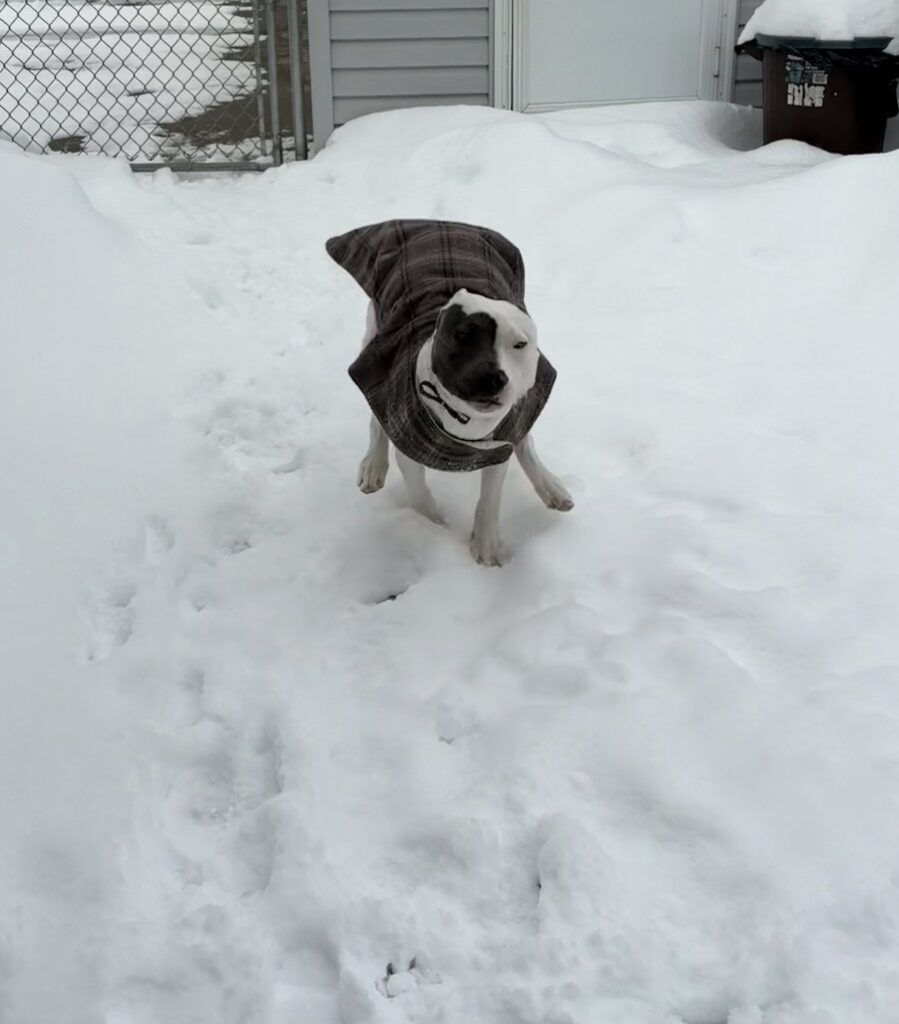
Look at this cute coat my colleague’s mother made for Luna.
Why This Actually Matters
I know a blog post about sustainable dog sweaters isn’t going to save the planet. The fashion industry’s environmental impact is massive and systemic, and pet fashion is a tiny fraction of that. But here’s why it’s worth thinking about: our pets are part of our consumer choices. If we’re trying to be more conscious about what we buy for ourselves, it makes sense to extend that thinking to what we buy for them.
Plus, normalizing sustainability in any category helps shift broader culture. When we start asking questions about where pet clothing comes from, what it’s made of, and where it goes when we’re done with it, we’re practicing the kind of critical thinking that applies to all consumption.
The goal isn’t perfection. It’s not about shaming anyone for buying their dog a cute bandana at Target. It’s about being thoughtful when we can, making better choices when those options exist and are accessible, and pushing for systemic change that makes sustainable options the default rather than the exception.
Scarlett might not care if her sweater is made from my old thrifted cardigan or brand new virgin polyester. But I care about the world she’s living in—and the one we’re all leaving behind. And if I can make her look adorable while also keeping textiles out of landfills? That’s what I call a win-win.

You can email me at LexySilverstein@gmail.com
Related Posts