

Berlin has always been known for its avant-garde edge and this year’s Fashion Week proved it’s not just about fresh looks, but fresh values. Sustainability wasn’t a buzzword; it was mandatory. Berlin Fashion Week 2026 became the platform showcasing fashion’s future: transparent, creative, and rooted in social responsibility.
Berlin, you did not disappoint.
What Are the New Berlin Fashion Week Sustainability Requirements?
For the first time, Berlin Fashion Week made sustainability standards mandatory for brands showing on the official schedule. In partnership with Copenhagen Fashion Week, designers had to meet strict eco-conscious criteria just to get a slot. Transparency, ethical production, and traceable supply chains weren’t optional. .
The requirements include:
- At least 60% of collections made from certified, recycled, or deadstock materials
- Formal sustainability strategies with public progress reporting
- Ethical labor practices and harassment-free work environments
- Circular design principles (repairability, recyclability, reusability)
- Zero-waste, plastic-free show production
Berlin wasn’t trying to out-glam Paris or Milan. It set a new benchmark for what a fashion event can be when sustainability is the foundation, not an afterthought.
Berlin Fashion Week vs Other Fashion Weeks: What Makes It Different?
The magic of Berlin Fashion Week has always been its raw energy. Unlike Paris, Milan, or New York Fashion Week, Berlin thrives on creativity that feels authentic and this year amplified that vibe through programs like NEXT GEN.
NEXT GEN: Supporting Emerging Sustainable Designers
NEXT GEN, the pop-up and exhibition at PLATTE curated by photographer Sven Marquardt, spotlighted six up-and-coming designers selected by an expert jury focused on design, sustainability, and fashion. Running from January 30 to February 14, the exhibition offered an immersive visual installation giving visitors a raw, intimate look into the minds of designers shaping Berlin’s future.
This kind of emerging designer support, complete with mentorship, retail exposure, and media visibility, sets Berlin apart from traditional fashion weeks that prioritize established brands.
Human Touch Brand: Making Garment Workers Visible Through Paint Sewing
What stood out this year was how designers like Human Touch didn’t just show finished pieces, they opened up their entire process. They invited everyone into their Kreuzberg studio during Fashion Week, giving us a glimpse into the world of craftsmanship.
What Is Paint Sewing? Inside Human Touch’s Unique Technique
I talked with Juliet Seeger-Banks, co-founder of Human Touch, on The Lexy Show: Fashion That Gives a Damn (listen on Apple Podcasts, Spotify, or wherever you get your podcasts), and she explained the brand’s unique “paint sewing” technique.
The person sewing literally covers their hands in water-based textile paint every 15-20 stitches, leaving their fingerprints imprinted on the fabric. It celebrates the human element of garment production—the hands that make it.
Fun fact: Human Touch created an upcycled SHEIN cardigan using their paint sewing technique and priced it at over €800 to make a point about the hidden labor costs in fast fashion.
I hope you’ll listen to the entire interview on my podcast.
How to Slow Down Fast Fashion: Lessons from Berlin
Fashion Week 2026 wasn’t just a celebration of design, it was a call to action against fast fashion. The fast fashion cycle doesn’t have to dictate the pace. Instead of rushing to churn out trend after trend, Berlin’s designers showed us there’s beauty and power in slowing things down and prioritizing ethics.
Copenhagen Fashion Week Sustainability Standards: The Framework
Copenhagen Fashion Week developed the sustainability framework that Berlin adopted, which includes 19 minimum standards across six focus areas:
- Strategic Direction – ESG strategy with public reporting
- Design – Durability, repairability, longevity
- Smart Materials – 60%+ certified/recycled/deadstock
- Working Conditions – Ethical labor, inclusive environments
- Consumer Engagement – Public sustainability communication
- Showcase Production – Zero-waste, plastic-free events
It’s not about rejecting fashion; it’s about reclaiming it. Brands are pushing us to rethink the value of clothing, to step back and ask: Who made this? What’s the story behind it? Where did it come from?
These questions are the foundation of fashion’s sustainable future, and it’s exciting to see them becoming mainstream at major fashion events.
Is Sustainable Fashion Really Cool? Berlin Says Yes
Here’s the thing: sustainability in fashion doesn’t have to be boring or preachy, it can be exciting and genuinely cool. I wished I’d been able to go to Berlin’s fashion week, but I loved following it and learning about how sustainability and creativity coexisted in a way that felt fresh and modern. It was about making eco-conscious fashion desirable, fun, and real.
Fashion, at its best, isn’t just about clothes, it’s about the stories we tell and the values we embody. And as Berlin Fashion Week proved, those stories can be fun, sexy, and impactful all at the same time.
Sustainable Fashion Tips: Think Twice, Buy Once
From my conversation with Juliet Seeger-Banks, one sustainable shopping tip stood out: the importance of thoughtful consumption.
“Think twice about what you buy. If you’re not entirely sure from the get go, go away, think about it, and if you’re still thinking about it, you can go back and get it.”
— Juliet Seeger-Banks, Co-Founder of Human Touch
That simple act of slowing down can lead to:
- More intentional fashion choices
- Fewer impulsive purchases
- Less textile waste
- Better wardrobe satisfaction
- Lower environmental impact
That’s the type of change we all need to make—and it starts with a pause button.
The Future of Sustainable Fashion Events
What Berlin Fashion Week 2026 showed us is that sustainability doesn’t have to be hard, and it doesn’t have to be boring. When done right, it can be incredibly exciting, glamorous, and most importantly, meaningful.
Fashion is about feeling good in what you wear, feeling good about what you stand for, and feeling good about the stories you tell. The brands at Berlin this year are setting the bar for what it means to design with purpose.
Which Fashion Weeks Have Sustainability Requirements?
Following Copenhagen’s lead, these fashion weeks are adopting or have adopted sustainability requirements:
- Berlin Fashion Week – Fully implemented February 2026
- Copenhagen Fashion Week – Mandatory since 2023
- Oslo Runway – Currently implementing
- Amsterdam Fashion Week – Pilot program started 2025
- London Fashion Week – In partnership discussions
So here’s to fashion’s future—one that’s conscious, inclusive, and beautiful inside and out. It’s time to demand better from the brands we support, and Berlin Fashion Week 2026 showed us how.
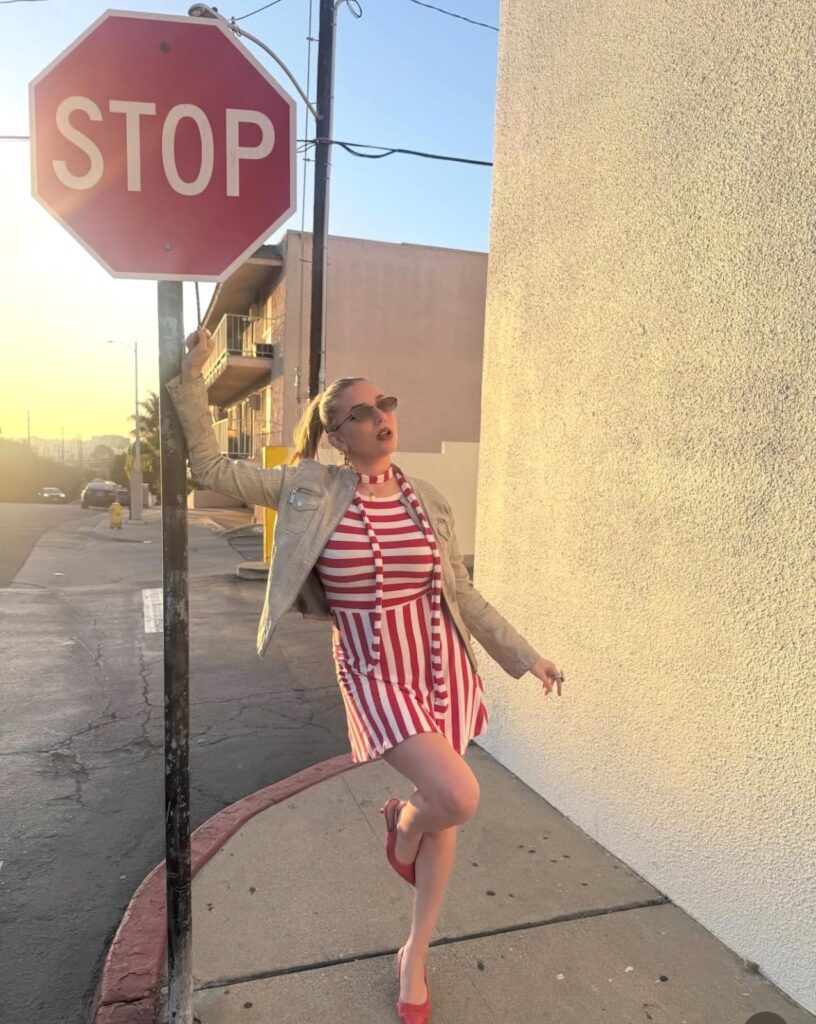
Lexy Silverstein in a Sustainable Outfit from Goodwilll, Thrifted purse from Los Feliz Flea Market
You can email me at LexySilverstein@gmail.com