
From Shein to ExxonMobil, brands learned the hard way that vague “eco” claims don’t fly anymore. Here’s what happened—and how to spot the BS going forward.
Sustainability marketing had a big year in 2025. Unfortunately, so did greenwashing.
From fashion brands overstating recycled content to beauty companies making vague “eco” claims with nothing to back them up, this year made one thing clear: consumers are paying attention, regulators are stepping in, and companies can no longer get away with saying less while sounding like they’re doing more.
This isn’t about canceling brands or pointing fingers for the sake of it. It’s about understanding why greenwashing keeps happening, who got called out this year, and how we can all get better at spotting the red flags as we head into 2026.
A Quick Reset: What Greenwashing Actually Is
Greenwashing happens when a company exaggerates, misleads, or outright lies about how sustainable their product, practices, or brand really are. Sometimes it’s intentional. Sometimes it’s sloppy marketing mixed with wishful thinking. Either way, the result is the same: consumers think they’re making a better choice when they’re not.
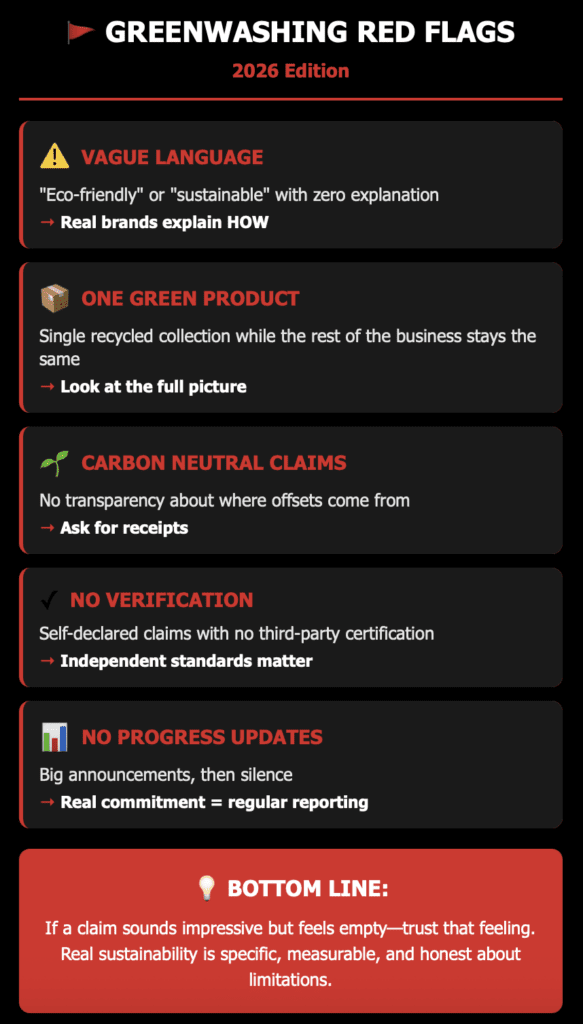
Common examples include vague terms like “eco-friendly” with no explanation, highlighting one small sustainable feature while ignoring much bigger environmental impacts, or launching a “conscious” collection while the rest of the business model stays the same.
If you’ve ever read a product description and thought, this sounds nice, but what does it actually mean—you’re not alone.
Brands That Made Headlines for Greenwashing in 2025
Here’s a snapshot of some of the most talked-about companies that faced serious greenwashing scrutiny this year:
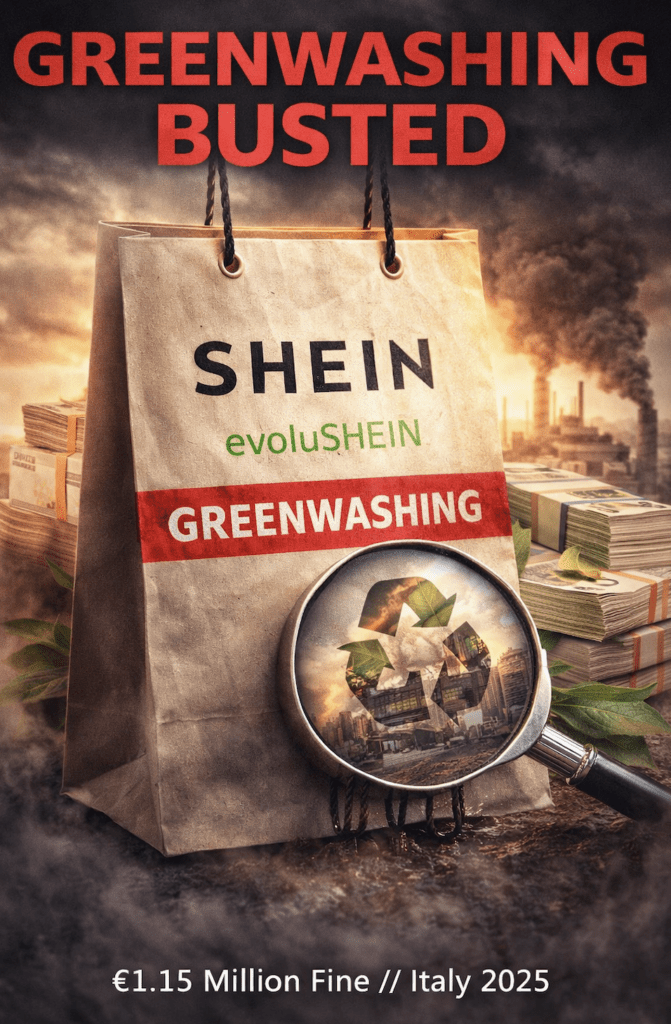
Shein — Fined in Europe for Misleading Claims
Shein got hit with a €1.15 million fine (roughly $1.2M USD) from Italy’s competition authority, according to Fortune, for misleading environmental claims on its European websites. The fine specifically called out how the fast-fashion giant overstated sustainability practices without clear evidence to back them up.
TotalEnergies — Misleading Carbon Neutral Messaging
TotalEnergies faced a French civil court ruling that its carbon neutrality messaging was misleading, Reuters reported. The oil major had been promoting its ability to become carbon neutral by 2050—but the court said the company overstated claims without adequate proof.
Tyson Foods — Agrees to Stop Misleading Carbon and Net-Zero Claims
Tyson Foods agreed to stop marketing certain products as “climate-friendly” and drop its net-zero by 2050 claims, Reuters confirmed, after environmental groups accused the company of creating a misleading impression about beef’s actual climate impact.
Nestlé Poland — Lawsuit Over “Recycling” Messaging
ClientEarth, an environmental nonprofit, sued Nestlé Poland over allegedly misleading slogans claiming environmental benefits on bottled water products, Packaging Insights reported. The lawsuit argued that the language exaggerated recycling performance and misled consumers.
Unilever — Accused of Overstating Climate Progress
A 2025 report published by AgFunderNews accused food giant Unilever of relying heavily on carbon removal strategies and weak certification standards rather than cutting emissions at the source—a common greenwashing critique in big food and beverages.
DWS Asset Management — Major ESG Overstatement Fine
German prosecutors fined asset manager DWS €25 million for overstating its ESG (Environmental, Social, Governance) credentials, according to The Anti-Greenwash Charter. Prosecutors said the firm presented itself as a sustainability leader without actions to match—making it one of the most significant greenwashing penalties in investment services this year.
ExxonMobil — Climate Messaging Lawsuit Advances
A major lawsuit in Connecticut against ExxonMobil just cleared a huge hurdle. The state is accusing the oil giant of straight-up lying to the public about climate change for decades—even though their own scientists knew the truth about fossil fuel damage as far back as the 1970s.
Connecticut Attorney General William Tong says ExxonMobil spent millions on ads downplaying climate science while knowing full well what their products were doing to the planet. Classic greenwashing on a massive scale. The judge’s decision to let the case move forward is a big win for climate accountability.
Here’s why this matters beyond Big Oil: If Connecticut wins, it sets a precedent for holding companies legally accountable when their environmental messaging contradicts the facts. Sound familiar? The fashion industry is full of sustainability claims that don’t hold up under scrutiny.
This case proves that greenwashing isn’t just ethically wrong, it’s increasingly legally risky. Whether you’re an oil company or a fast fashion brand, the days of vague eco-claims without receipts are numbered. At least we can hope.
Why 2025 Had So Many High-Profile Greenwashing Moments
A few bigger trends help explain why so many companies made headlines over greenwashing in 2025:
1. Consumer and Legal Pressure Are Both Rising
People aren’t just scrolling past vague claims anymore, they’re calling them out. In many of the examples above, the pushback came from environmental groups or government regulators tired of ambiguous sustainability messaging that doesn’t hold up under scrutiny.
2. Sustainability Language Is Becoming Legally Enforceable
Regulators in Europe, North America, and Australia are tightening rules around environmental claims, as documented by Thomson Reuters. Misleading statements about carbon neutrality or recycling aren’t just bad PR anymore—they’re legal risks with real financial consequences.
3. Carbon Offsetting Has Become a Major Flashpoint
Offset programs are frequently at the center of greenwashing disputes. Critics argue that relying on unverified carbon credits or future reductions can make current claims about neutrality—or even progress—misleading.
What to Watch for Moving Into 2026
The good news is that it’s getting easier to spot greenwashing once you know what to look for. But 2026 is shaping up to be a critical year for how sustainability claims are regulated—and who’s doing the regulating.
Keep an eye on legal cases like the ExxonMobil lawsuit in Connecticut. If states start winning these battles, it creates precedent for holding companies accountable when their environmental messaging doesn’t match reality. We’re also likely to see more consumer class action lawsuits targeting fashion brands with questionable sustainability claims.
Watch for updates from the FTC on green marketing guidelines. While enforcement may be shifting (more on that below), the guidelines themselves set important standards for what constitutes legitimate versus deceptive environmental claims.
Pay attention to international regulations, particularly the EU’s Green Claims Directive and Digital Product Passport requirements. These rules are forcing brands to substantiate their claims with verifiable data—and they’ll impact any company selling in European markets, including American brands.
The US Regulation Gap—and Who’s Picking Up the Slack
Here’s the reality: Federal environmental regulation in the US is weakening under the current administration. Agencies like the EPA and FTC are scaling back enforcement, and we’re not likely to see aggressive federal action on greenwashing or climate accountability in the near term.
That means states are stepping up. California, New York, Connecticut, and Massachusetts are leading legal challenges against companies making misleading environmental claims. State-level consumer protection laws are becoming the primary tool for holding brands accountable in the US.
We’re also seeing international regulations do the heavy lifting. The EU’s strict sustainability requirements are effectively setting global standards—if brands want access to European markets, they have to comply, which often means changing practices across the board. Countries like the UK, Canada, and Australia are also advancing their own green marketing regulations.
The takeaway? Don’t expect the US federal government to crack down on greenwashing anytime soon. Real accountability is coming from state attorneys general, international regulatory bodies, and consumer lawsuits. It’s a patchwork approach, but it’s creating consequences for brands that thought vague sustainability claims would fly under the radar.
Why This Matters, Even If You’re “Just One Person”
It’s easy to feel cynical about sustainability marketing, especially after seeing how many brands got it wrong this year. But consumer pressure works. Regulatory action works. Public accountability works.
The fact that greenwashing claims made headlines in 2025 is actually a sign of progress. It means people are asking better questions, and companies are being forced to answer them.
You don’t have to research every brand like it’s a thesis project. Even small shifts—like being skeptical of vague claims or supporting brands that are transparent about their limitations—make a difference over time.
As we move into 2026, sustainability conversations are getting sharper, not softer. And that’s a good thing. Real progress doesn’t come from perfect messaging. It comes from honesty, accountability, and a willingness to do better, even when it’s uncomfortable.

You can email me at LexySilverstein@gmail.com
Related Posts