
There’s a version of sustainable fashion history that gets told a lot. It involves Instagram aesthetics, capsule wardrobes, celebrities with tote bags. It’s clean, it’s marketable, and it skips over the person who actually did the foundational intellectual work before any of that existed.
Her name is Kate Fletcher. And if you haven’t heard of her, that’s worth paying attention to — because the gap between who built something and who gets credited for it is often the most revealing thing about an industry.
Who is Kate Fletcher?

Fletcher is a British academic and design researcher who has spent more than two decades doing the kind of work the fashion industry rarely rewards: asking structural questions about why the system is built the way it is, and what it would take to actually change it.
She currently serves as Professor of Sustainability, Design and Fashion Systems at Manchester Metropolitan University, and her work has defined the field of fashion and sustainability for over two decades. Her academic work has been cited nearly 9,000 times, which, in research terms, means other scholars keep building on her foundation.
She Didn’t Just Write About Sustainability. She Named the Alternative.
In 2007, Fletcher published an article in The Ecologist coining the term “slow fashion,” drawing a deliberate parallel to the Slow Food movement. But the comparison ran deeper than a catchy name.
In her own framing: “Slow is not the opposite of fast — there is no dualism — but a different approach in which designers, buyers, retailers and consumers are more aware of the impacts of products on workers, communities and ecosystems.”
That distinction matters. She wasn’t proposing a shopping alternative. She was proposing a different way of thinking about the entire chain — who makes things, how, for whom, at what cost, and what happens after.
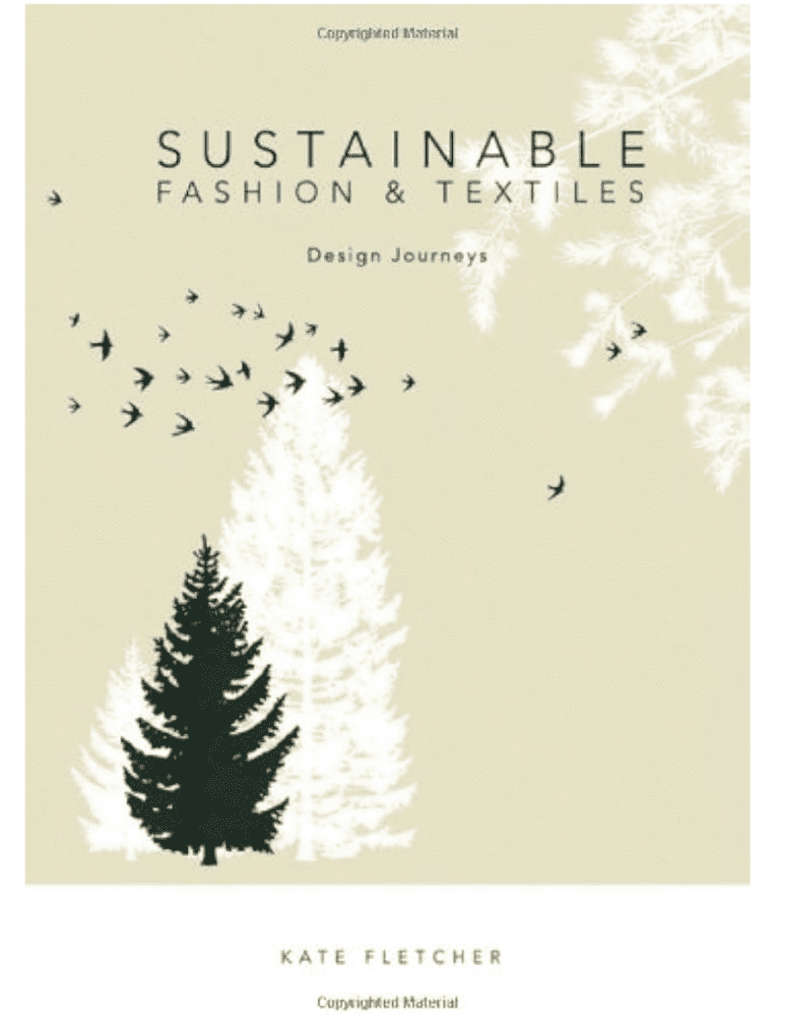
Then in 2008 came Sustainable Fashion and Textiles: Design Journeys — a book that brought together, for the first time, information about lifecycle environmental impacts, practical alternatives, design concepts, and social innovation, all framed within a sustainability context. It became the foundational text of the field. It’s still in print. Still cited. Still assigned in university courses.
The Research Finding That Should Change How You Think About Your Wardrobe
In 2016, Fletcher published Craft of Use: Post-Growth Fashion, built on interviews with 500 people across three continents about their actual relationships with their clothes. What she found pushes back hard against the fast fashion industry’s core assumption.
As Fletcher put it: “We frequently talk about how we imagine that there’s a driver for endless newness, and people have an appetite only for what they’ve never had before. I think there’s lots of evidence to suggest that many of the things that people find incredibly satisfying are things they have had for a long time.”
Read that again. The industry’s entire growth model is built on the premise that you always want something new. Fletcher went and actually asked people and found that’s not what makes them happy. What makes people happy is attachment. History. A jacket that has somewhere to be.
The book argues that garments, while sold as products, are lived as processes. In other words, what happens after you buy something is just as important, maybe more important, than the purchase itself. Wearing, mending, altering, passing on. That’s not a consolation prize for people who can’t afford new things. That’s the actual point.
Then She Went Further: Earth Logic
If Craft of Use challenged how individuals think about clothes, Fletcher’s 2019 Earth Logic: Fashion Action Research Plan — co-authored with researcher Mathilda Tham — challenged the entire industry’s operating system.
The core argument: the fashion sector’s underlying purpose is set to economic growth, and with that precondition, continuous expansion becomes a structural requirement, along with concomitant resource drawdown, waste, and pollution. The better the sector performs by its own logic, the worse those problems become.
That’s not an opinion. That’s a systems diagnosis. Any attempt to make fast fashion greener while the growth mandate stays intact is, by her analysis, treating a symptom while the disease accelerates.
Earth Logic proposes a different premise entirely: Earth placed first, before everything else, including profit. It was written as a direct response to the 2018 IPCC report’s warning that the world had roughly a decade to fundamentally change course.
Why This Matters For How You Shop Or Don’t
Here’s what Fletcher’s work, taken together, actually says to anyone trying to navigate fashion more consciously:
The problem was never just bad materials or brands without ethics certifications. The problem is a system designed to make you feel like what you have is never enough. The moment you feel satisfied, the industry stops growing.
When you thrift, rewear, mend, or simply stop buying something you don’t need, you’re not just making a personal choice. You’re opting out of the mechanism Fletcher spent decades documenting. That’s different from buying the “sustainable” version of the same impulse purchase.
What Sustainable Fashion Actually Means (For Search and for Real Life)
These terms get used loosely. Here’s what they actually refer to:
- Slow fashion — a design and consumption approach prioritizing awareness of impact on workers, communities, and ecosystems over speed and volume
- Craft of use — Fletcher’s framework for the active, skillful, satisfying relationship people develop with clothes they already own
- Post-growth fashion — a model that doesn’t depend on selling more to survive
- Earth Logic — the principle that ecological limits, not GDP growth, should set the boundaries of fashion activity
- Lifecycle impact — total environmental cost of a garment from raw material extraction through disposal
- Growth logic — the embedded assumption in mainstream fashion that expansion is always the goal