
There was no theme this year. Not really. The spring 2026 exhibition is titled “Costume Art,” and the dress code is “Fashion Is Art,” referencing the exhibition’s pairing of garments with art objects. Which is fine as a curatorial concept. But as a directive for what celebrities should wear to one of the most photographed events on the planet, it offers almost nothing. No lens. No urgency. No invitation to ask harder questions. Just: be artistic.
Compare that to what the Met Gala theme used to actually do. In 2024, “Sleeping Beauties: Reawakening Fashion” functioned almost like a sustainability brief. Charli XCX walked in a Marni look Francesco Risso constructed from patchworked vintage t-shirts spanning three decades. Amanda Seyfried wore deadstock Prada fabric from 2009. Billie Eilish had already set the bar in 2022 with a custom Gucci gown built entirely from pre-existing materials, arriving in vegan platform shoes. Those weren’t just good outfits. They were arguments, and the theme gave people the space to make them.
This year, there was no framework pushing anyone anywhere. And what’s remarkable is that some stars showed up with intention anyway.
The Looks at Met Gala 2026 That Actually Meant Something
Not everyone on those steps last night was playing it safe. A handful of guests used the vague “Fashion Is Art” brief as permission to show up with real intention.
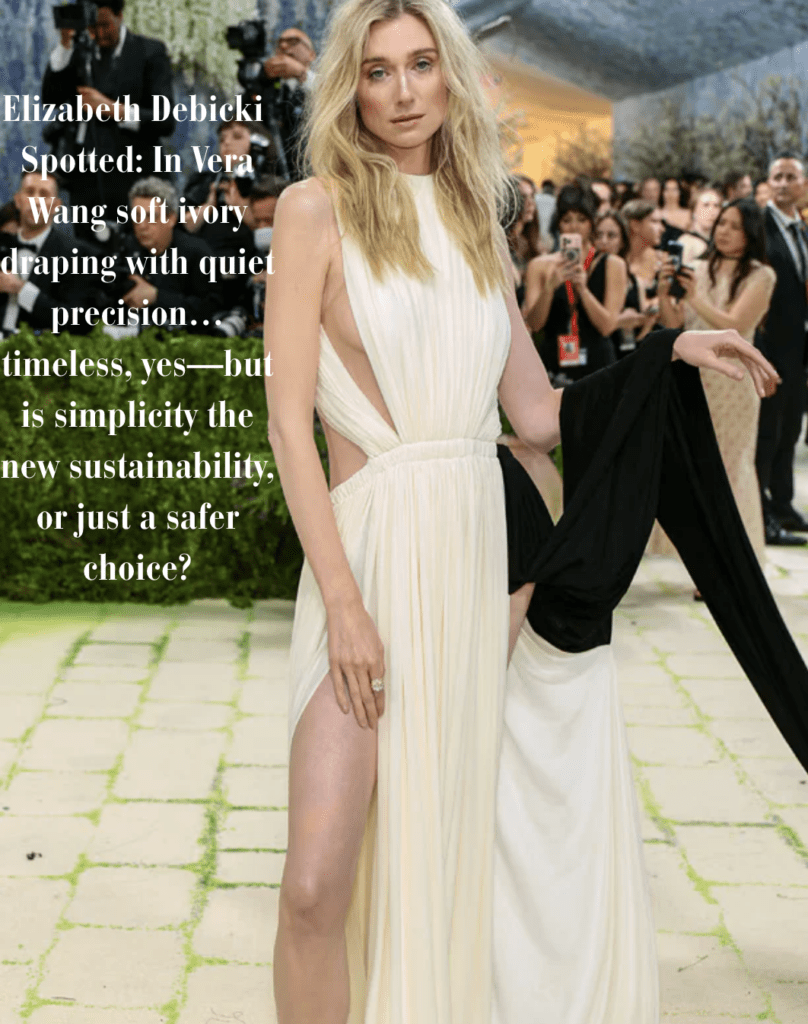
Elizabeth Debicki in Vera Wang, soft, minimal, ivory draping. Timeless, yes. But simplicity isn’t the same as sustainability, and it’s worth being honest about that. Not buying new things is the most sustainable choice. Buying a new custom gown that happens to not be ornate is still a new custom gown.
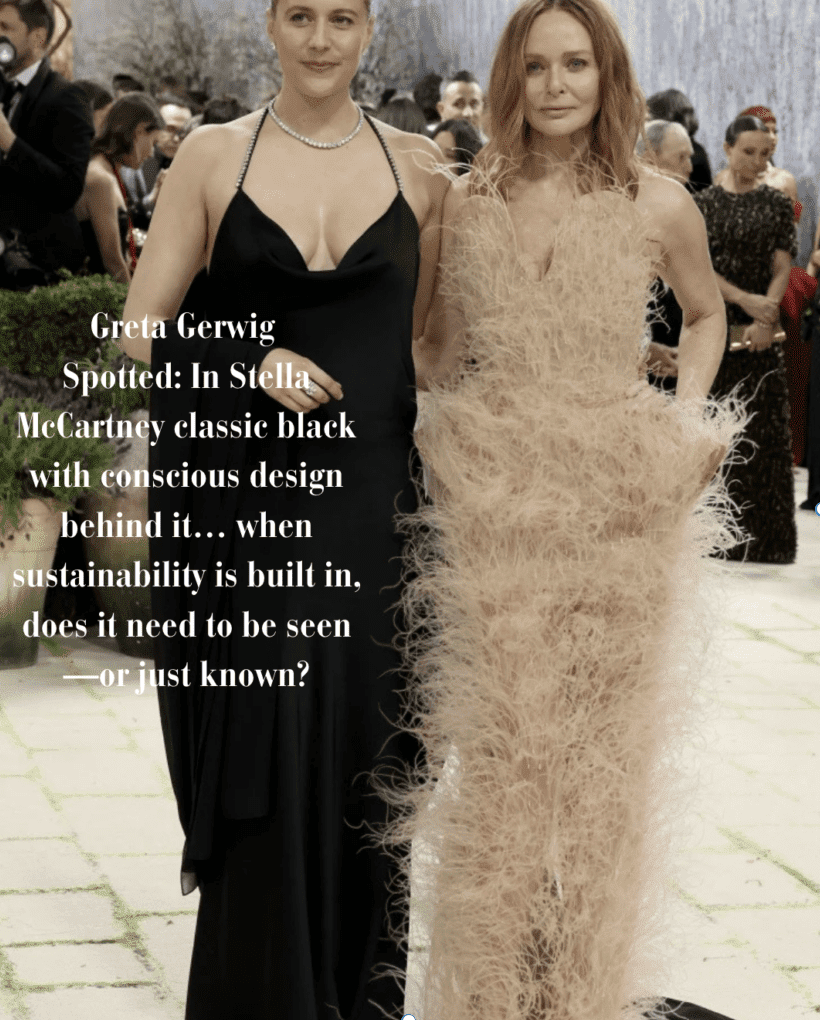
Greta Gerwig in Stella McCartney. McCartney has built her entire brand around conscious design: no leather, no fur, recycled materials, supply chain accountability. The dress doesn’t announce itself as sustainable. It just is. There’s an argument that this is actually the more useful model because it normalizes sustainability as a baseline rather than a marketing angle.
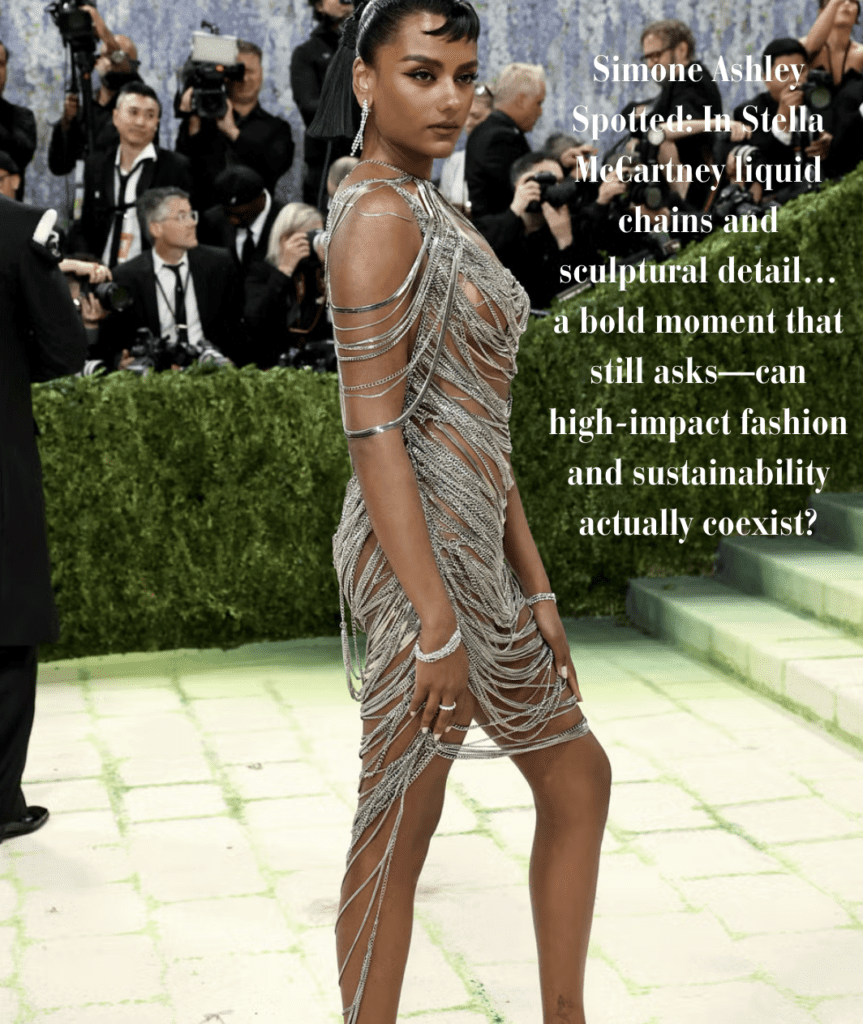
Simone Ashley in Stella McCartney’s liquid chain construction, which raised a fair question: can high-impact fashion and sustainability actually coexist? The answer is yes, sometimes, if the brand behind it has done the work. McCartney has. That doesn’t mean every choice is perfect, but it means the question is worth asking more often.
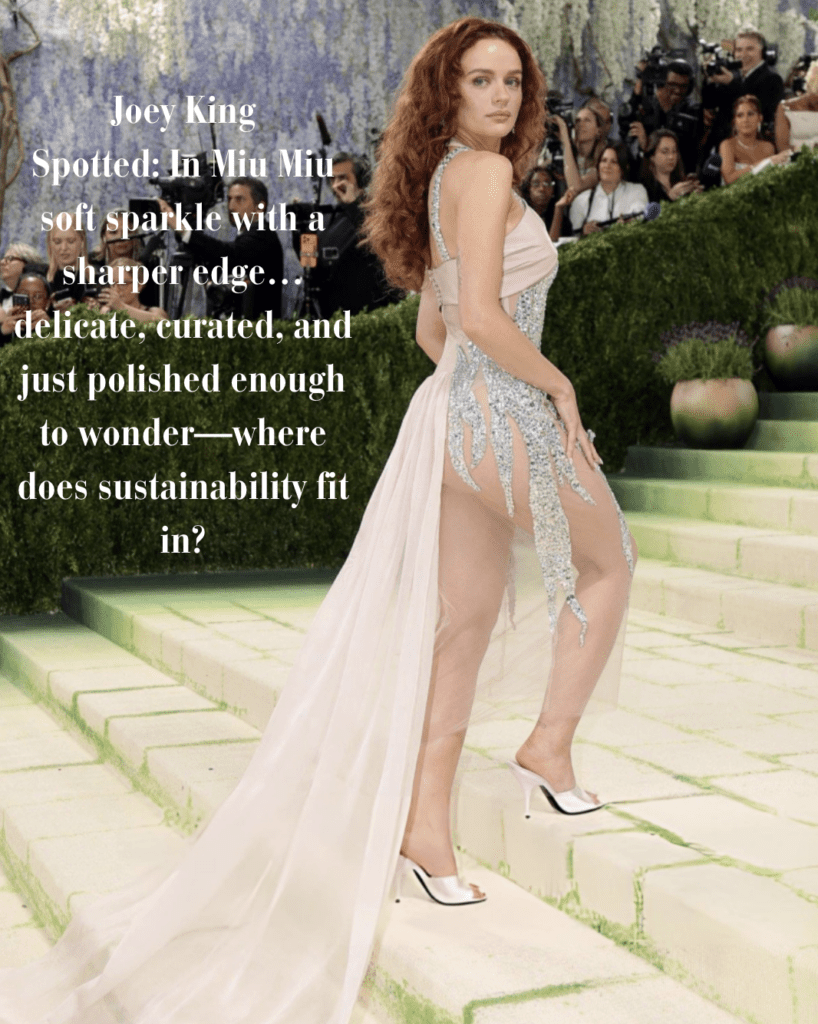
Joey King in Miu Miu. Beautiful. Delicate. Where does sustainability fit in? It doesn’t, really, in an obvious way. And that’s fine to say. Not every look has to carry a values argument. But when none of them do, and the theme gives them no reason to try, you notice the absence.
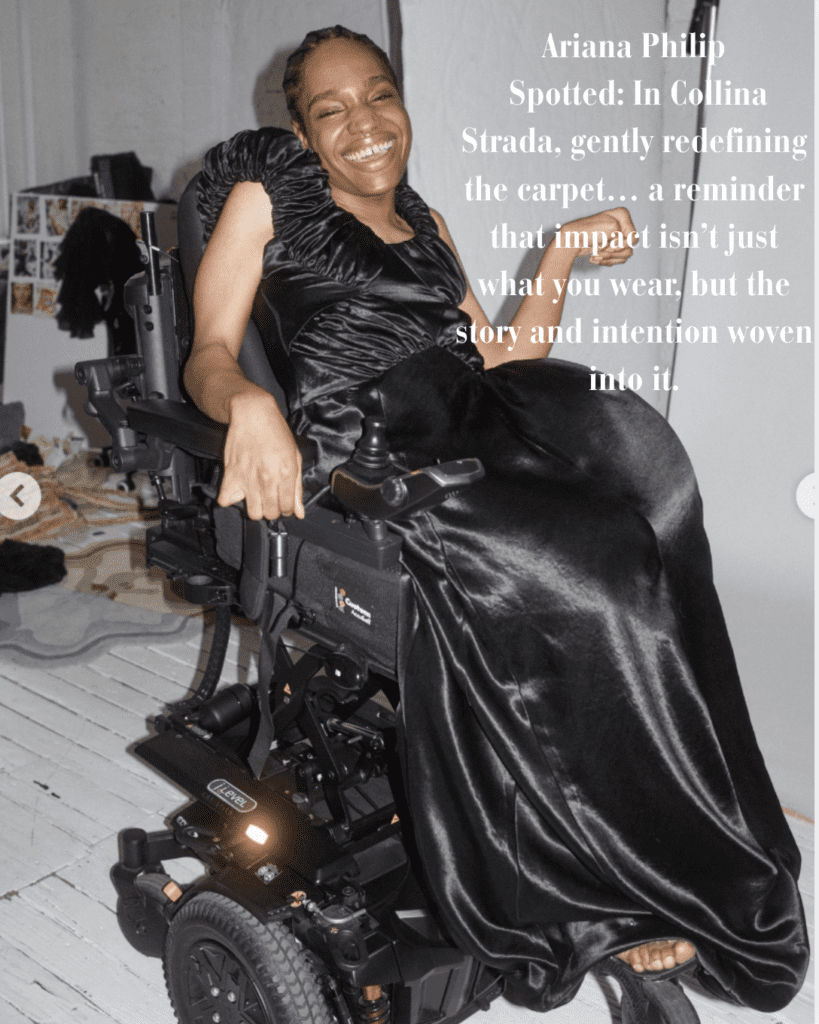
Ariana Philip showed up in Collina Strada, quietly. And that’s the thing about Collina Strada. Hillary Taymour has been building with deadstock, organic, and reclaimed materials for years, without the press coverage that better-connected designers get. Philip showing up in that gown is a reminder that impact isn’t always measured in column inches. Sometimes it’s just about who you’re wearing and why.
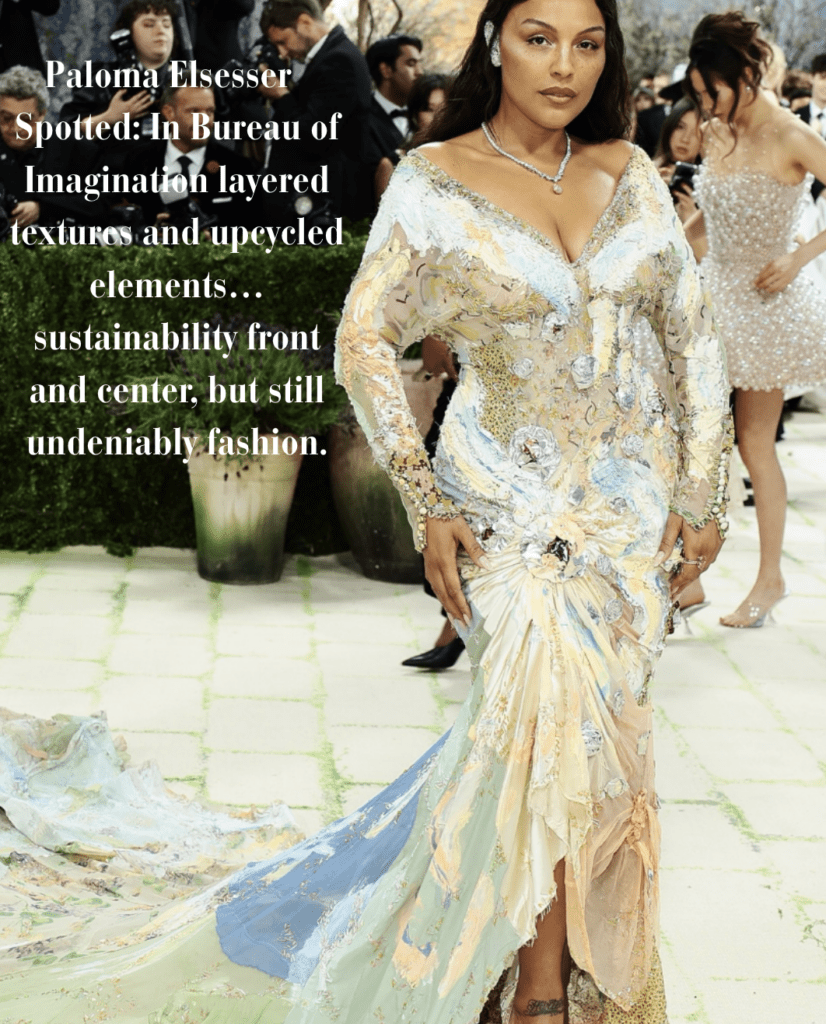
Paloma Elsesser wore a painterly Francesco Risso look from Marni, layered textures and upcycled elements that read as fashion first but carried a clear material story. Risso’s track record at Marni has consistently included reclaimed and reworked textiles, so this wasn’t accidental. Elsesser knows her designers, and she made a choice.
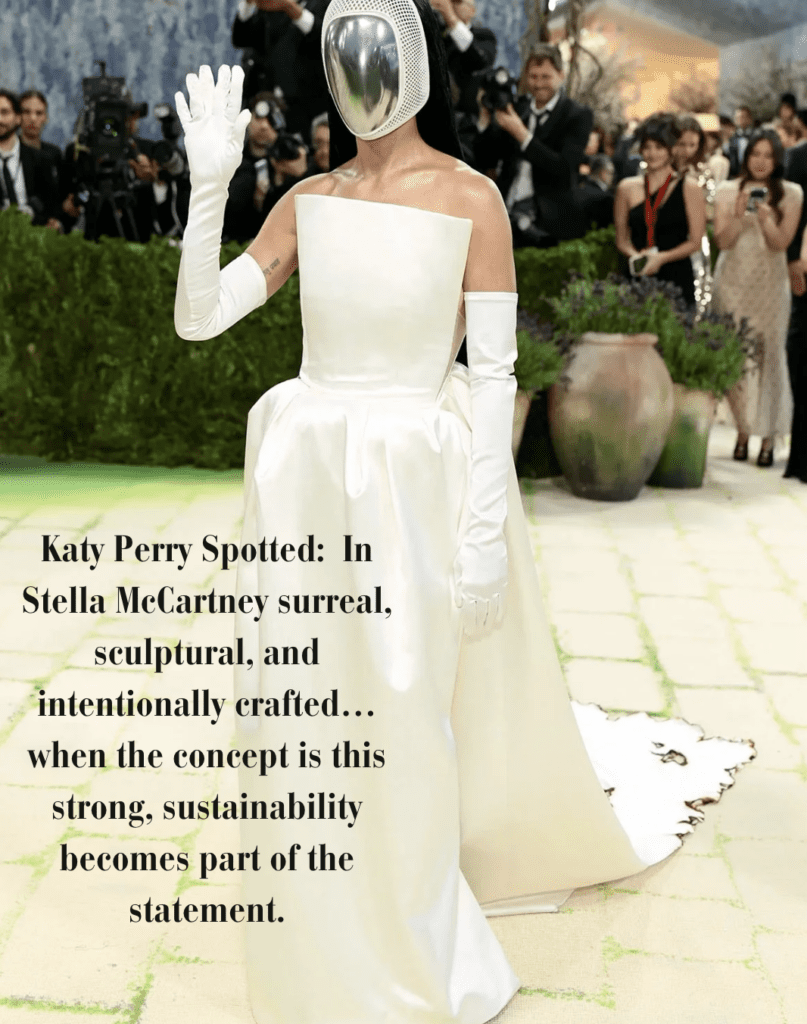
Katy Perry, also in Stella McCartney, in a sculptural white gown with an unmistakable look that belonged to a strong, clear concept. When the creative intention is this developed, sustainability isn’t a footnote. It’s woven into why the piece exists at all.
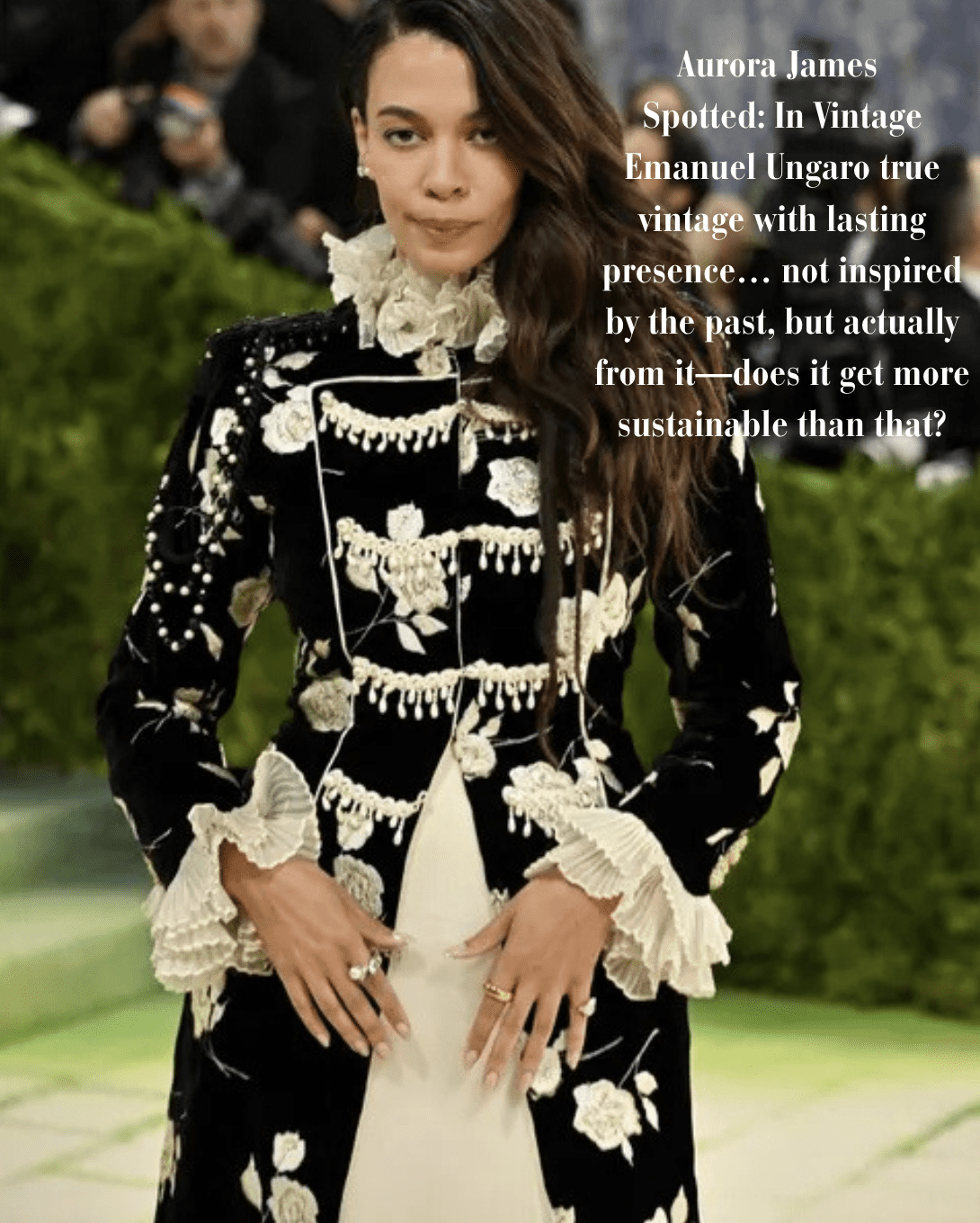
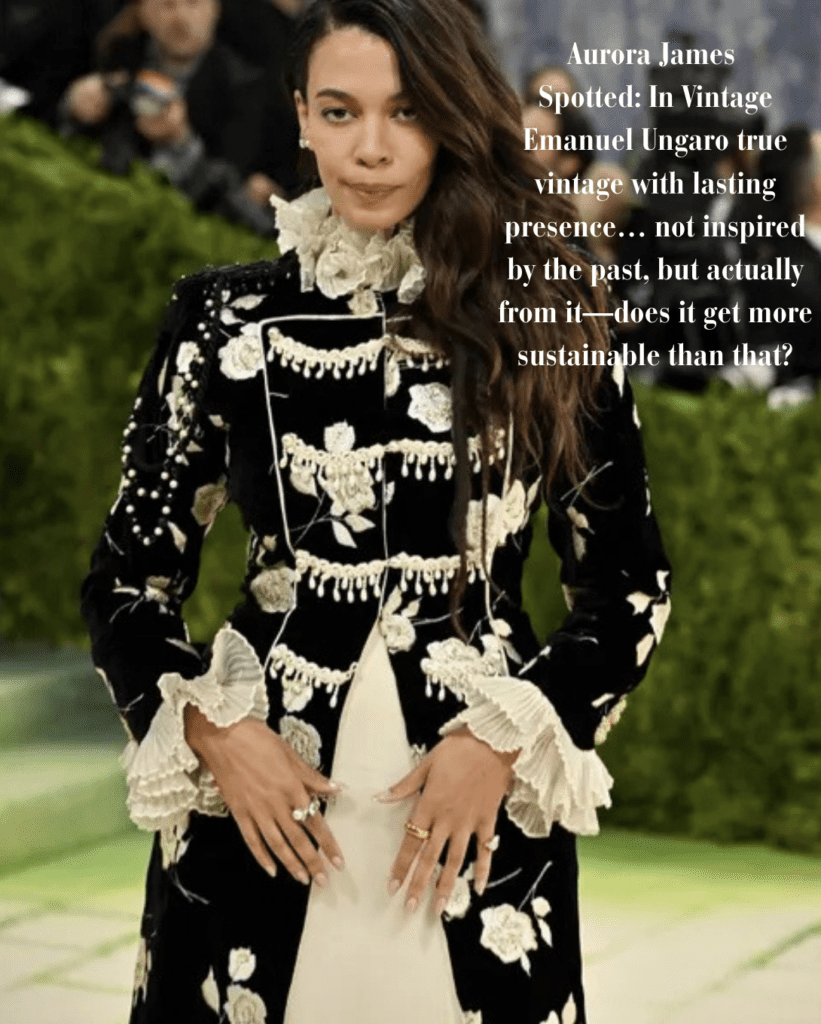
Aurora James arrived in vintage Emanuel Ungaro, actual archive, not a new piece referencing an old one. This is worth pausing on because the distinction matters. Referencing the past is a mood board. Wearing the past is a supply chain decision. True vintage means no new production, no new emissions, no new synthetic fabrics. It means something already existed and someone chose to honor it instead of replacing it.
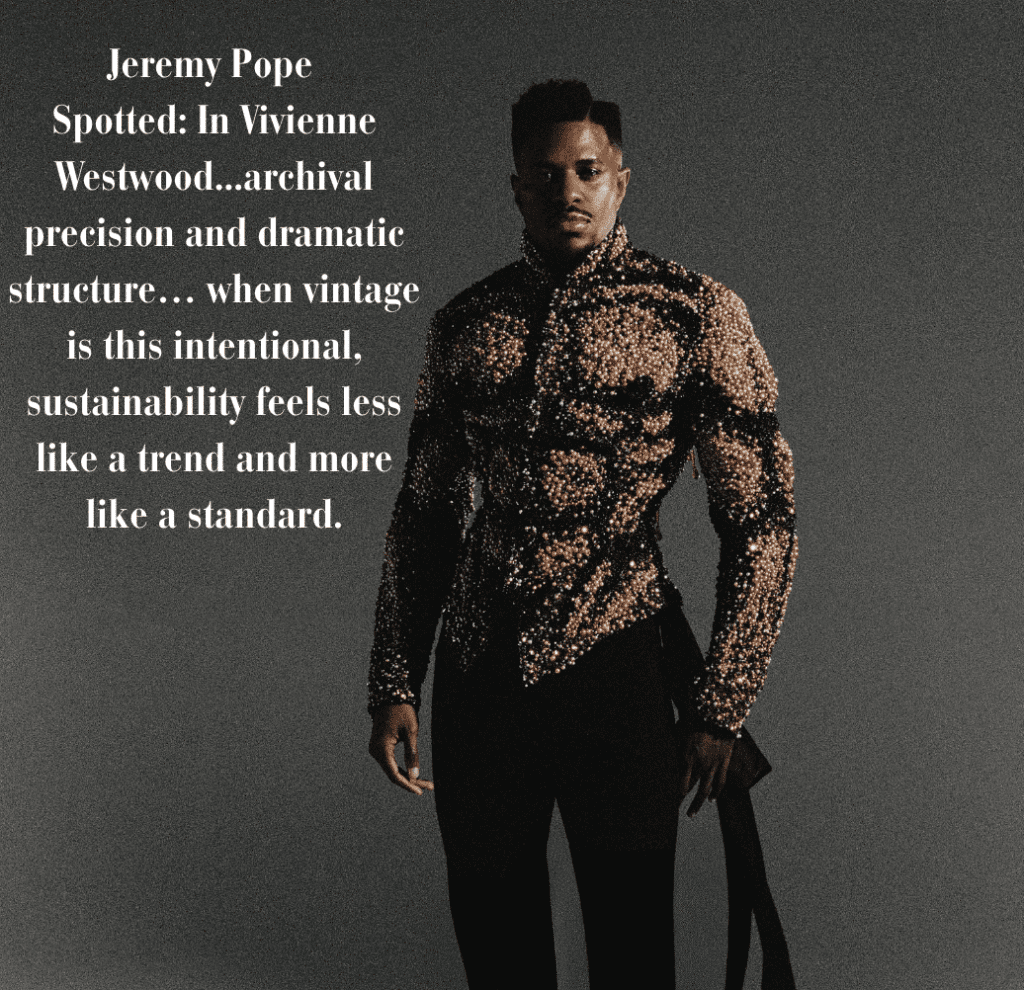
Jeremy Pope in Vivienne Westwood archival pieces. Westwood spent the last decades of her life treating climate activism as inseparable from her work. Pope wearing her archive isn’t just a stylish callback. It’s alignment. When vintage is chosen this deliberately, it stops being a styling decision and starts being a values statement.
Why Jeff Bezos Sponsoring the Met Gala Is a Sustainability Problem
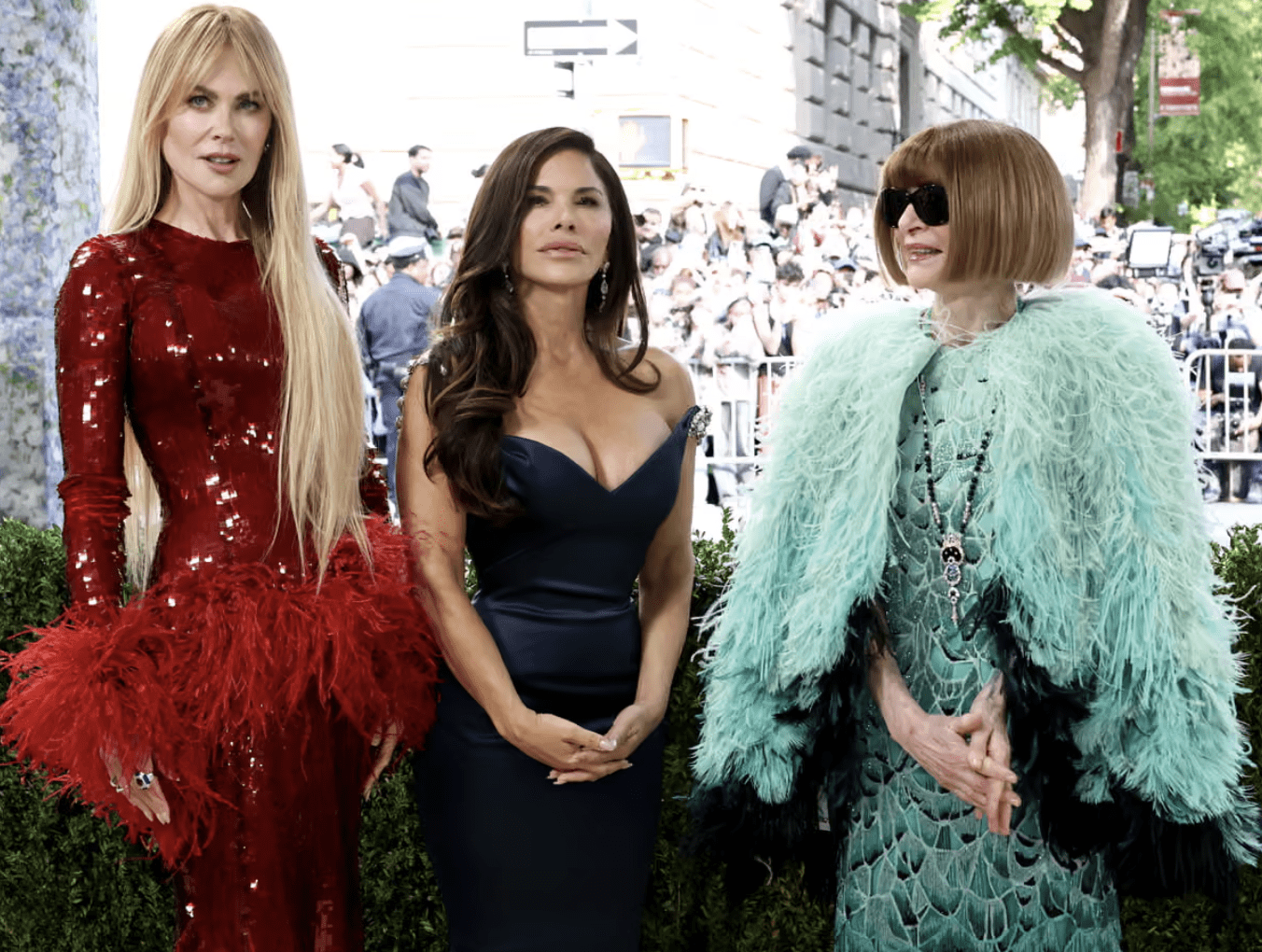
Jeff Bezos and Lauren Sánchez Bezos served as lead sponsors and honorary chairs for the 2026 Met Gala. The optics aren’t great: the couple has aligned with the Trump administration, which has cut funding for the arts, and their appearance comes across as very “let them eat cake” amid a nationwide surge in anti-rich sentiment.
The “let them eat cake” reference isn’t hyperbole. In 2024, a TikToker posted a stylized video of herself at the Met Gala wearing a floral gown over audio of “let them eat cake” before she hosted for E on the carpet. That moment broke through because it captured something people had already been feeling. Fashion’s biggest night was starting to look less like a celebration of creativity and more like a demonstration of who gets to have nice things.
The 2026 event raised a record $42 million, up from last year’s then-record $31 million. Individual tickets hit $100,000. Bezos and Sánchez reportedly contributed $10 million, and Amazon, Meta, OpenAI, Snapchat, and Shopify all purchased tables at $350,000 each. It’s the first time a tech figure served as lead sponsor. The guest list, for decades built around fashion and entertainment, now has Silicon Valley at the center.
This deserves nuance, because it’s not nothing. The Costume Institute is the only curatorial department at the Metropolitan Museum of Art required to fund its own operations. Without the Met Gala, it couldn’t exist the way it does. The work they produce, exhibitions on Black dandyism, on the fragility of archival fashion, on the relationship between clothing and identity, has real cultural value. Museums are one of the few places where people without money can stand in front of something priceless. That funding matters.
The question is who’s doing it and what that costs.
The Bezos Earth Fund teamed with the Council of Fashion Designers of America to launch a $6.3 million collaboration funding sustainable fashion education, and in April awarded $34 million in grants to institutions studying sustainable textiles. So yes, there is money going toward sustainability from this direction. That’s real. But it’s hard to separate that from the fact that Amazon is also arguably the single largest driver of fast fashion consumption in the United States, shipping billions of low-cost, short-lifespan garments to doorsteps across the country every year. You can fund sustainable textiles research and still be running the delivery infrastructure for a system that makes textile waste worse. Both things can be true.
Bezos’s net worth grew $15 billion in 2025 alone, reaching $268 billion. At the peak of the original Gilded Age, the wealthiest families held about 0.85% of the country’s total wealth. The richest 0.01% now hold 10%. We are not in a new Gilded Age. We are past it.
The Ball Without Billionaires: The Other Met Gala
While the red carpet was being rolled out uptown, hundreds of workers, organizers, and advocates gathered in the Meatpacking District for the Ball Without Billionaires, a worker-led fashion show organized by the SEIU, the Strategic Organizing Center, and the Amazon Labor Union. The models were current and former workers from Amazon, Whole Foods, The Washington Post, Starbucks, and Uber. The designers were emerging, immigrant, and BIPOC creatives. The Met’s theme was “Fashion Is Art.” The counter-event’s theme: “Labor Is Art.”
That’s not a gimmick. That’s a real argument about who fashion belongs to and who it excludes.
Sustainable fashion has always been, at its core, about more than materials. It’s about the seamstress in the factory. The warehouse worker clocking ten-hour shifts. The delivery driver hitting impossible quotas. Even at $17 an hour, adjusted for inflation, Amazon’s recent wage raise is worth less in real terms than previous ones. The people who make the clothes, ship the clothes, and return the clothes are part of the sustainability conversation, whether the industry wants to include them or not.
Meryl Streep and Zendaya both sat this year out. Bella Hadid also skipped, allegedly in protest of the Bezos sponsorship. Zendaya has shown up seven years running. Sitting this one out is a choice, and when some of fashion’s most credible names quietly decline their invites, it registers louder than any look on those steps.
What Sustainable Fashion at the Met Gala Actually Looks Like
The Met Gala doesn’t need a sustainability theme to produce sustainable fashion moments. Aurora James in genuine vintage, Jeremy Pope in Westwood archive, Paloma Elsesser in reworked Marni, these choices happened without the theme prompting them. That’s the thing about values: people who actually have them don’t need a dress code to act on them.
But they’re easier to see when the event makes space for them. When the theme creates a framework, more people bring intention to the table. This year, the theme was so open it could mean anything, which meant it pushed almost no one toward anything.
That’s a missed opportunity, especially right now, when the fashion industry is facing real regulatory pressure around transparency and textile waste, when resale is outpacing traditional retail, and when the people outside the museum were making a more coherent argument about fashion and value than most of what was happening inside it.
The Met Gala raises money for fashion history. That’s genuinely worth something. And it can also be more honest about what the industry is doing with the present.
If you want to hear more please follow me on Instagram & TikTok @LexySilverstein.