
This isn’t just the holiday season; it’s candle season, and National Candle Safety Week is here to remind us of the hidden dangers that come with this cozy tradition. While candles help set the perfect mood for the holidays, they also pose a serious fire risk. In fact, more house fires occur in December and January than any other months of the year, with Christmas Eve and Christmas Day being particularly high-risk for candle-related fires. That’s why this week is dedicated to raising awareness about fire safety and how we can prevent these risks during the festive season.
But candles are just one piece of the puzzle when it comes to fire safety.
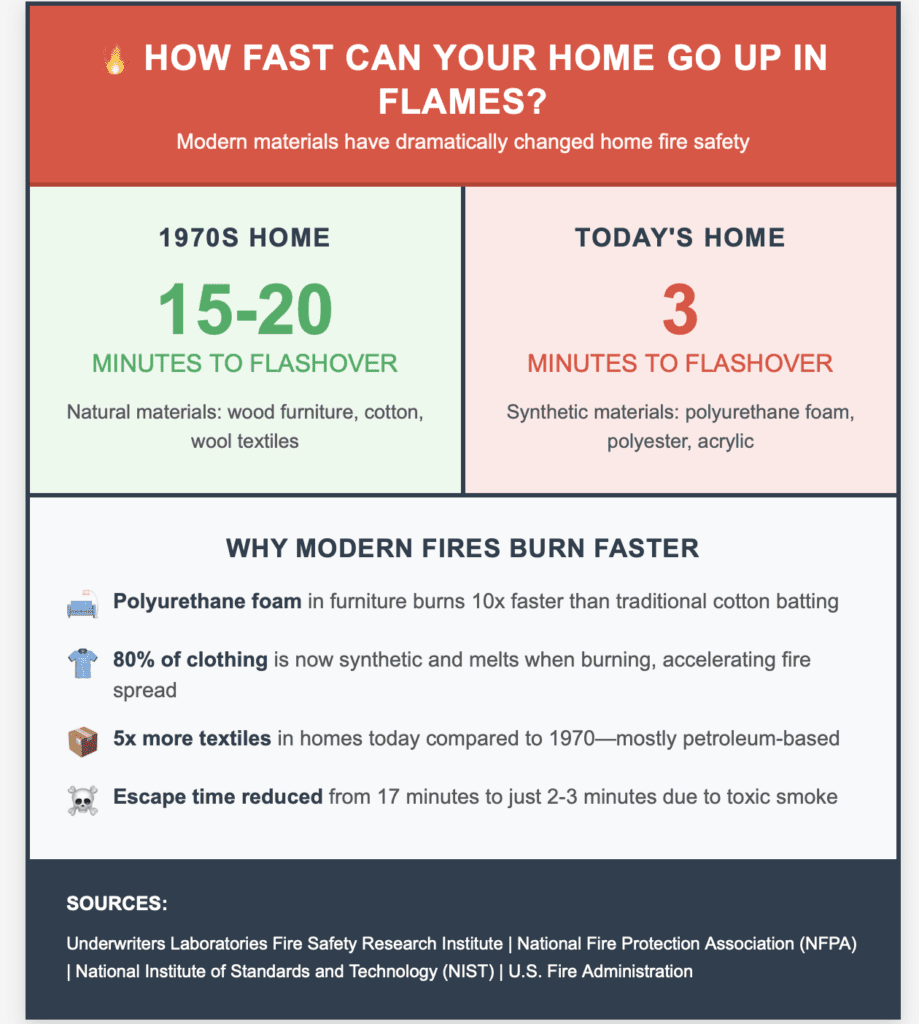
Consider this: a modern living room, full of synthetic materials, can hit flashover (when the whole room is engulfed in flames) in as little as three minutes. You read that right—JUST 3 MINUTES! Forty years ago, a typical living room might have taken 15 to 20 minutes to reach flashover. That dramatic difference isn’t just about candles; it’s about what’s inside your home. The materials we use in everything from furniture to fashion.
So, as we think about fire safety this National Candle Safety Week, it’s also a good time to reflect on the impact of fast fashion—the fast-growing industry that, with its cheap, synthetic materials, contributes to both environmental harm and fire risks in our homes.
Why Fires Burn Faster Today: It’s Not Just About Candles
The reason modern fires spread so fast is largely due to the materials in our homes. Today’s furnishings are mostly synthetic, such as polyurethane foam, polyester, nylon, and acrylic. These petroleum-based materials burn much faster than natural materials like wood, wool, and cotton, which were more commonly used in the past.
While candles have always posed a fire risk, the environment in which they burn has changed dramatically. A knocked-over candle today, landing on a polyester blanket or a polyurethane-filled couch, is much more dangerous than it was decades ago. Modern materials burn faster, release toxic gases, and make it much harder for people to escape.
How Fast Fashion Contributes to the Problem
Here’s where it gets surprising: the same synthetic materials used in fast fashion are contributing to the fire risks in your home. Today, most of what we wear and decorate with is made from petroleum-based fibers like polyester, nylon, and acrylic. These materials ignite much faster than natural fibers like cotton and wool, and when they burn, they create toxic smoke that can make escape nearly impossible.
Fast fashion isn’t just a problem for the environment—it’s a fire hazard too. The average American home now contains five times more textiles than homes had in 1970, and most of them are synthetic. From puffer jackets and cozy fleece blankets to area rugs and even cheap bedding, these materials are part of the fire risk equation in your home.
Fashion’s Role in the Fire Hazard
The fast fashion industry has literally reshaped the fire risk profile of homes. Today, 80% of clothing sold is made from synthetic materials, such as polyester blends. When these fabrics burn, they melt and drip, accelerating heat release and producing thick toxic smoke. The same kind of smoke that creates the 2-3 minute escape window firefighters warn about.
So, when we talk about candle safety and modern house fires burning faster, this is not a totally separate issue from sustainability. It’s all connected. The materials we buy, wear, and sleep on are part of the fire equation. Fast fashion contributes to the problem in a way most people don’t realize—by turning your home into a fire risk with every synthetic fiber.
What You Can Do to Stay Safe
So, how can you protect your home and family from these increasing fire risks? Here are a few practical steps to take:
- Opt for Natural Fibers: When shopping for clothing and home textiles, choose natural materials like cotton, wool, and linen. These burn slower and are safer for your home.
- Go Vintage with Furniture: Vintage and thrifted furniture often contains natural materials, such as solid wood, which are much slower to ignite. Plus, it’s more sustainable.
- Practice Safe Candle Use: Always blow out candles when you leave the room. Never place them near fabrics, clothing, or anything flammable. Make sure candles are on sturdy, non-tip surfaces.
- Test Your Smoke Alarms Monthly: It’s an easy habit that could save your life.
- Create a Two-Minute Escape Plan: If a fire starts, time is critical. Have a simple, clear plan for how to exit the house quickly.
- Practice with Your Roommates, Family, or Kids: Make sure everyone in your household knows the escape plan and practices it regularly.
- Know Your Exits and a Meeting Spot: Have a designated meeting spot outside where everyone should gather after escaping.
- Have a Fire Extinguisher Handy: Keep a fire extinguisher in the kitchen, garage, and other key areas. Make sure everyone knows how to use it.
- Use Fire Blankets: Keep fire blankets in areas prone to fire risk, like the kitchen. They’re great for smothering small fires quickly.
- Prepare for Pets: If you have pets, ensure they are included in your escape plan. Keep their leashes or carriers near exits so they can be grabbed quickly. Place stickers on windows or doors to alert firefighters about pets inside the house.
Sustainability and Safety Go Hand in Hand
Candle Safety Week is a reminder that fire risks are greater than ever before. But it’s not just about blowing out candles, it’s about understanding how the materials around us impact our safety. By making smarter, sustainable choices when it comes to the materials in our homes and our wardrobes, we can reduce the risk of fire and protect our loved ones.
Modern fires may move faster, but with the right knowledge and precautions, we can stay ahead of them. Your home’s safety starts with you and your choices matter.

You can email me at LexySilverstein@gmail.com
Related Posts