
Plastic in the ocean is one of those problems that feels too big to fix, but what if we could turn some of that waste into something useful? That’s exactly what Econyl is doing. This recycled nylon fabric is made from ocean waste like fishing nets and fabric scraps, giving it a second life in everything from swimsuits to outerwear. It’s a smart, eco-friendly material that’s as stylish as it is sustainable – and it’s a simple way we can all help make a difference.
What Is Econyl and How Does It Work?
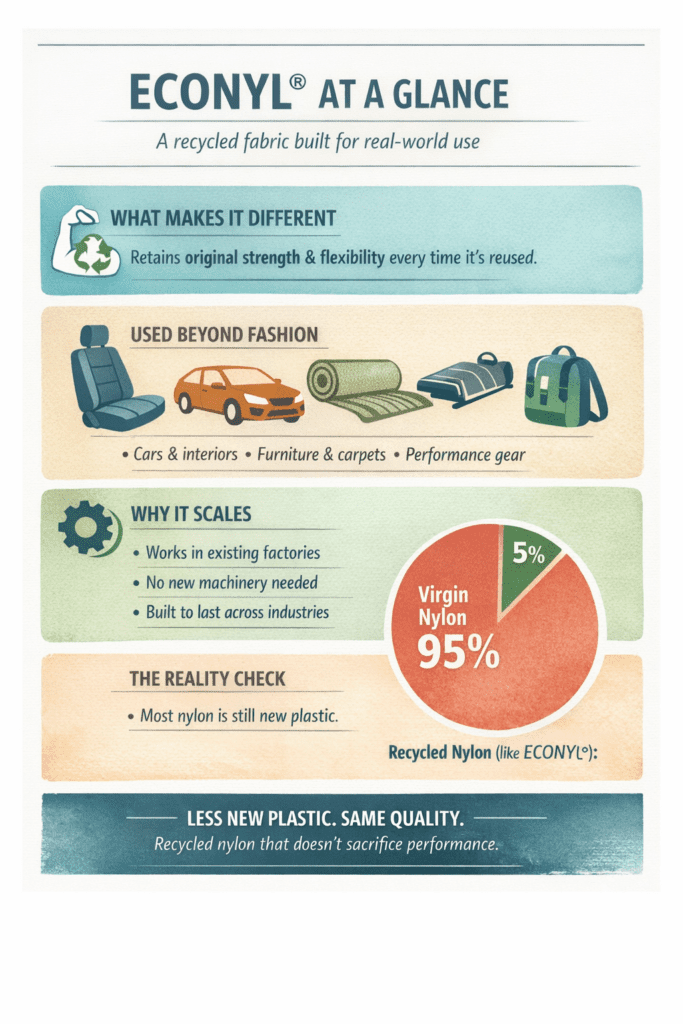
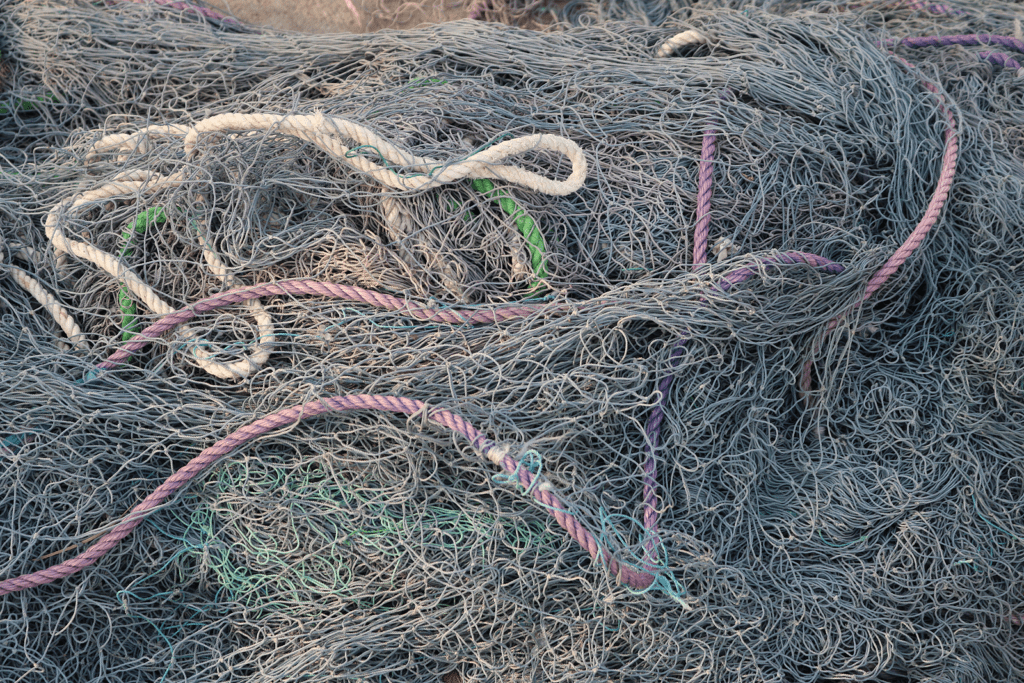
Econyl is nylon, just like the regular nylon you’ll find in everything from swimsuits to activewear to your favorite pair of tights. It’s got the same stretch, the same durability, the same performance. But here’s what makes it different: instead of being made from petroleum like traditional nylon, Econyl is recycled nylon created from waste that would otherwise end up polluting our planet. We’re talking fishing nets pulled from the ocean, old carpets ripped out of offices, fabric scraps from manufacturing floors, and other nylon waste.
The genius of it? You literally can’t tell the difference between Econyl and virgin nylon when you’re wearing it. Same fabric, same feel, same quality—but one is made from oil drilled out of the ground, and the other is made from garbage we’ve already created. What’s more, Econyl is 100% recyclable, so once you’re done with that chic dress or those swim trunks, they can be recycled into something new again and again. Talk about a circular economy.
How Does Econyl Help Clean Up Ocean Plastic?
Plastic waste in the ocean is one of the most pressing environmental issues of our time. According to recent research, between 1 and 2 million tons of plastic enter the ocean every year, causing irreparable damage to marine ecosystems. A big part of that problem comes from discarded fishing nets, which the UN Environment Programme reports make up around 10% of all ocean plastic. These nets are dangerous for marine life, often trapping animals and creating “ghost nets” that continue to harm the environment for years.
This is where Econyl comes in. By recycling these materials and turning them into fabric, Econyl helps remove plastic waste from our oceans while offering a sustainable solution for the fashion industry. Estimates suggest that between 500,000 to 1 million tons of fishing gear are discarded or lost in the ocean every year, so choosing products made from Econyl means you’re actively contributing to cleaning up our oceans. That’s something we can all feel good about.
Is Econyl Actually Making a Difference at Scale?
Here’s the question that matters: is Econyl just a feel-good niche product, or is it actually moving the needle? The good news is that this isn’t a drop in the bucket—Econyl is being used by over 1,900 brands worldwide, from luxury fashion houses to outdoor gear companies. Aquafil, the company behind Econyl, has the capability to produce over 250,000 tons of recycled nylon annually.
Let’s keep it real, though. While that’s impressive, the fashion industry still produces over 100 billion garments each year, and synthetic fibers dominate the market. Econyl alone isn’t going to solve our ocean plastic crisis overnight. But here’s why it matters: it proves that recycled materials can work at an industrial scale without sacrificing quality or performance.
Major brands are already on board. Prada, Patagonia, Adidas, Gucci, and Stella McCartney are all using Econyl in their collections. BMW is even using it in car interiors. When you see that level of adoption across industries, you’re watching a shift happen in real time. The more brands that switch to recycled nylon, the more infrastructure gets built to support circular fashion systems—making it easier and more cost-effective for the next brand to do the same.
The challenge now is scaling up collection and recycling infrastructure to match production capacity. We need better systems for collecting fishing nets and other nylon waste, better sorting technology, and more recycling facilities. The technology works—now it’s about making it the norm rather than the exception.
Why Should You Choose Econyl Over Traditional Nylon?
By choosing Econyl, you’re helping to reduce the demand for virgin nylon, which is made from petroleum-based resources and contributes to pollution and carbon emissions. According to sustainability research, polyester and nylon production combined accounts for 10-15% of the fashion industry’s total carbon footprint. Every time you opt for recycled nylon over new, you’re lowering your environmental impact.
Beyond that, Econyl helps tackle the waste problem. The UN Environment Programme estimates that the fashion industry is responsible for about 92 million tons of textile waste each year. Choosing fabrics like Econyl helps close the loop in the textile waste cycle, creating a system where waste is reimagined and reused instead of dumped in landfills.
Where to Find Econyl and How to Start Shopping Sustainably
Sustainable fashion can seem overwhelming, especially when you’re trying to figure out what’s worth investing in. But choosing fabrics like Econyl is one simple way to make a big impact. You don’t need to completely overhaul your wardrobe—just start incorporating more eco-friendly materials into your clothing purchases.
Major activewear and swimwear brands like Patagonia, Outerknown (founded by surfer Kelly Slater specifically for ocean conservation), and Vitamin A are all using Econyl. On the fashion side, luxury players like Prada, Gucci, and Stella McCartney are incorporating it into their collections. Even outdoor brands like The North Face and smaller sustainable labels are jumping on board.
Next time you’re shopping for a new piece of clothing, check out whether the brand uses Econyl or other recycled materials. Your style and the planet will thank you.
Why Econyl Represents the Future of Sustainable Fashion
Choosing to incorporate materials like Econyl into your wardrobe isn’t just about following a trend—it’s about making a conscious decision to support a more sustainable future. The fashion industry has a massive environmental impact, and while it may feel overwhelming at times, every small step we take adds up.
The beauty of Econyl is that it proves sustainability can go hand-in-hand with style. You don’t have to compromise on quality or performance when you opt for a more eco-friendly alternative. Whether it’s a swimwear set, a chic jacket, or an everyday bag, products made from recycled materials like Econyl are here to stay—and they’re only going to become more popular as we shift towards a more conscious fashion world.
So, the next time you’re shopping for something new, think about where it’s coming from and what it’s made of. Investing in recycled nylon might just be one of the easiest—and most stylish—ways to contribute to a cleaner, more sustainable planet.
Follow Me on My Socials:

You can email me at LexySilverstein@gmail.com