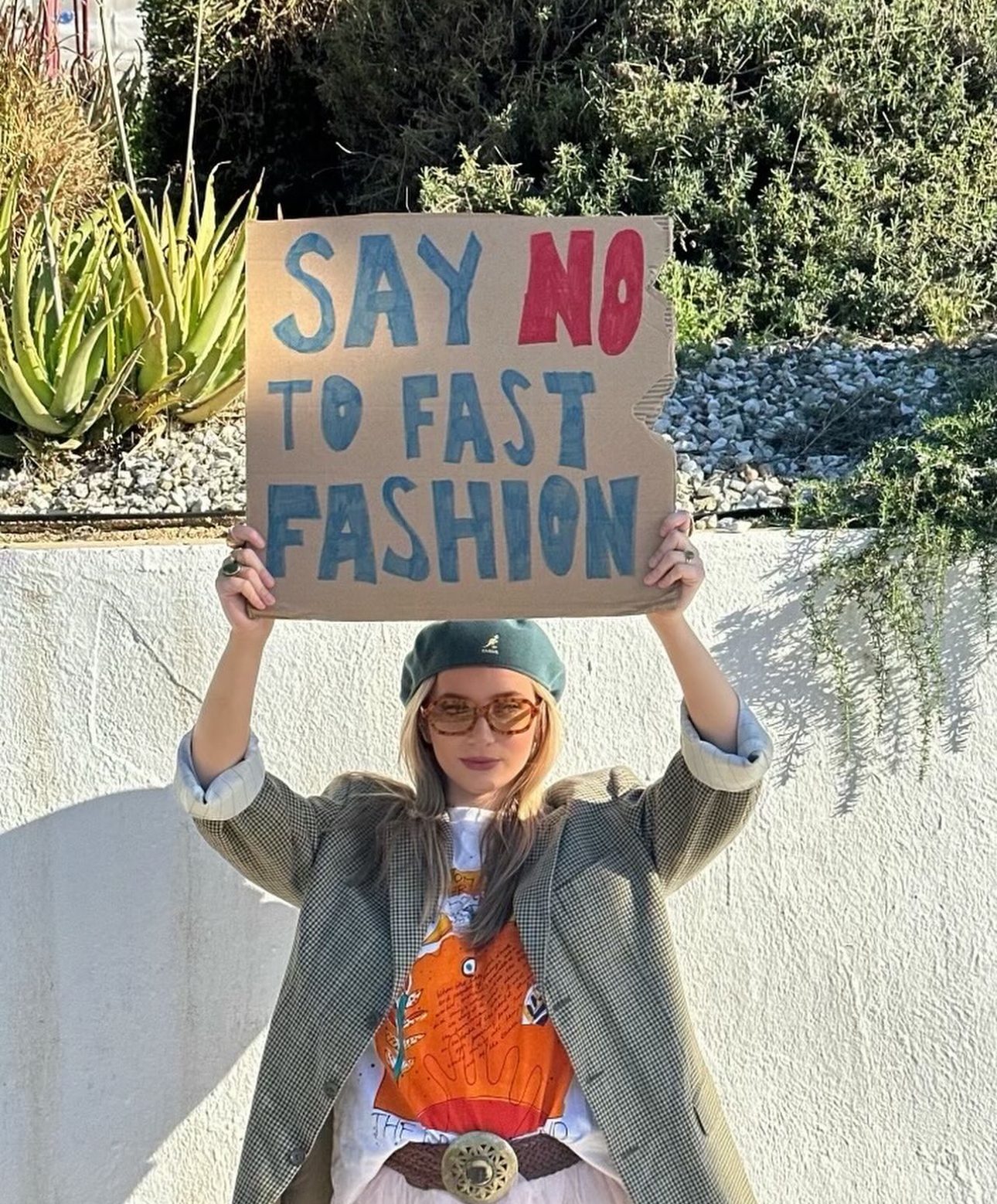

Picture this: you open your closet and everything inside has a purpose. No half-worn impulse buys. No “maybe if I change my entire personality, I’ll wear this” pieces. No pile of almost-new clothes you secretly feel guilty about. Just items you love, use, and actually wear. And best of all, none of it is destined for a landfill anytime soon.
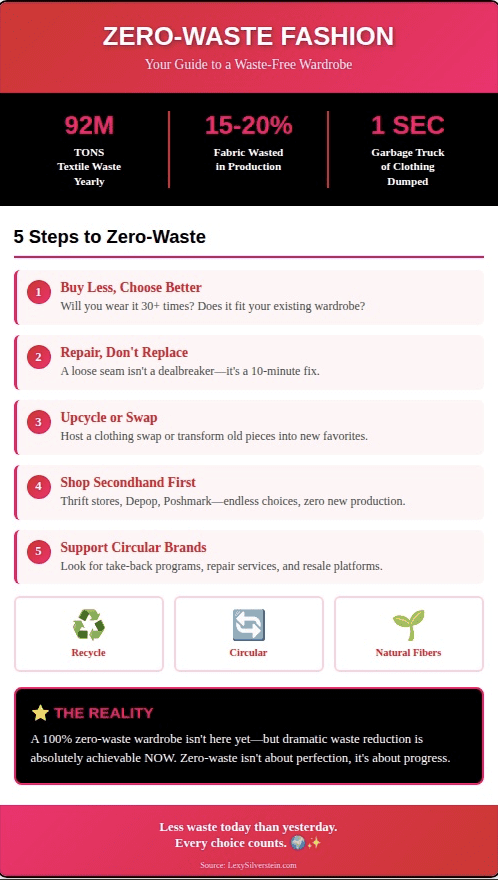
Sounds dreamy, right? Especially when the real world looks very different. The fashion industry currently produces more than 92 million tons of textile waste every year. That’s a garbage truck of clothing dumped or burned every single second.
So yeah, the idea of a “zero-waste wardrobe” feels ambitious. Actually, it seems impossible, especially if you’ve been following my blog and hearing about the challenges of sustainable living. But here’s the thing: it’s not impossible, it’s just not easy. A completely waste-free wardrobe might feel like a far-off goal, but the truth is, we’re making real progress. Zero-waste fashion isn’t about perfection, it’s about taking steps in the right direction — and that’s what we’re working towards.
What Zero-Waste Fashion Actually Means
Zero-waste fashion isn’t just one thing, it’s a holistic way of designing, producing, buying, wearing, and eventually recirculating clothing.
Here’s what defines it:
1. Zero-waste design
Traditional pattern-making wastes 15–20% of fabric. Zero-waste designers create layouts that use every inch, essentially fabric origami that’s as clever as it is resource-efficient.
2. Better materials with an end-of-life plan
Natural and biodegradable fibers like organic cotton, hemp, wool, and TENCEL™ break down naturally. No centuries-long landfill sentence.
3. Circularity in practice
Clothes are made to last, repair easily, and eventually be recycled or upcycled, not tossed. A zero-waste system thinks about the entire life cycle, not just the shopping moment.
Brands proving it’s possible:
- Zero-Waste Daniel transforms factory leftovers and scraps into vibrant patchwork pieces.
- Maison Cléo produces made-to-order clothing using deadstock materials, meaning no excess inventory and no waste.
This isn’t a theory. It’s happening now.
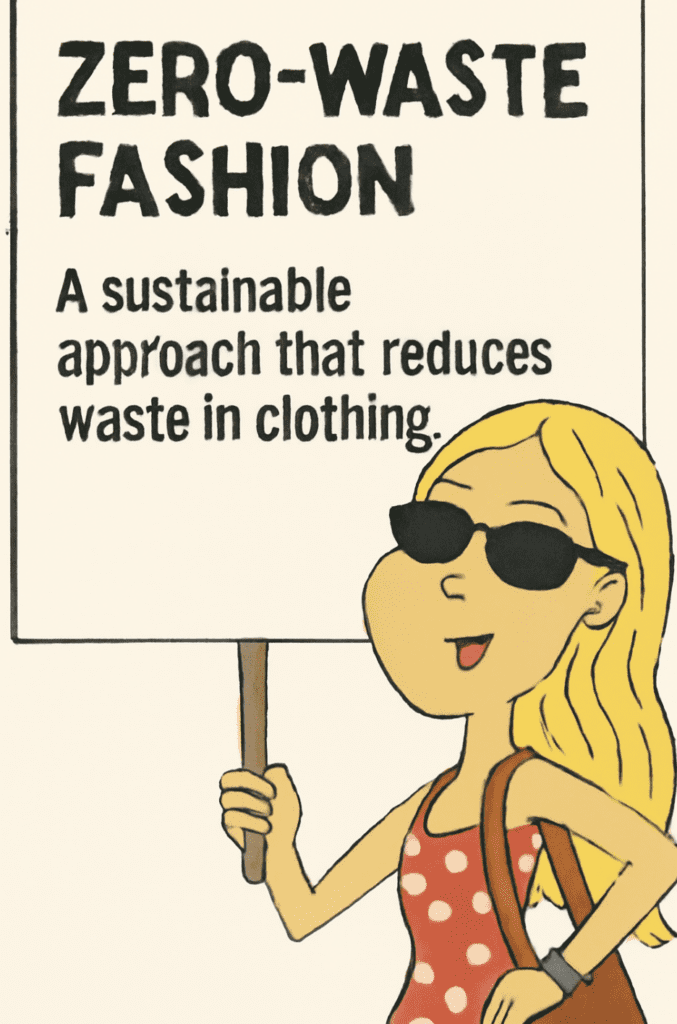
The Reality Check: Can a 100% Zero-Waste Wardrobe Exist?
In one word: not yet. And that’s okay.
Here’s why a fully zero-waste wardrobe is tough right now:
Material limitations
Most clothes today contain synthetic blends that can’t be easily recycled or separated.
Recycling infrastructure is behind
Fiber-to-fiber recycling exists, but it’s still developing and often expensive.
“Sustainable” processes can still create waste
Even natural fibers require water, energy, and sometimes dyes that leave a footprint.
But here’s the hopeful part: we’re making real progress.
Brands are shifting toward circular systems. Examples:
- Patagonia Worn Wear repairs, resells, and recycles gear.
- Eileen Fisher Renew takes back worn pieces and remakes them.
- Reformation tracks water, carbon, and waste impact on every product page.
A 100% zero-waste wardrobe might be a long-term goal, but dramatic waste reduction is absolutely achievable now.
How to Build a (Nearly) Zero-Waste Wardrobe
No lifestyle overhaul required. Start small and steady.
1. Buy Less, Choose Better
If you take one principle with you, make it this. Before you buy anything, ask:
- Will I wear it at least 30 times?
- Does it work with things I already own?
- Would I want it if it weren’t discounted?
If the answer is “no,” it’s probably a temporary crush.
2. Repair, Don’t Replace
A loose seam, missing button, or tiny tear is not a dealbreaker. It’s a 10-minute fix. Tailors exist. YouTube tutorials exist. Visible mending is a whole art form.
3. Upcycle or Swap
Turn an oversized tee into a crop top. Old jeans into shorts or a tote bag. Host a clothing swap — your “meh” item may be someone else’s favorite piece.
4. Shop Secondhand First
Thrift stores, Depop, The RealReal, Poshmark — endless choices without new production. Plus, secondhand pieces often last longer because they’ve already survived real life.
5. Support Brands With Circular Programs
Look for:
- Take-back systems
- Repair services
- Resale platforms
- Clear end-of-life policies
When brands design with responsibility, it makes your zero-waste efforts much easier.
What Zero-Waste Really Looks Like
A zero-waste wardrobe is not about owning ten minimalist basics or DIY-ing everything you wear. It’s not about being perfect. It’s about being intentional.
It looks like:
- Wearing what you buy
- Buying what you’ll wear
- Giving items a second life
- Repairing before replacing
- Aligning your closet with your values, not the trend cycle
Think of it less as an aesthetic and more as a mindset: less waste today than yesterday.
The Path to a Sustainable Wardrobe: Small Steps Towards Zero-Waste Fashion
Will fashion ever be completely zero-waste? Maybe one day. But right now, we can dramatically cut waste, support circular design, and change the industry’s direction, piece by piece, closet by closet.
The future of fashion isn’t built on endless newness. It’s rooted in longevity, creativity, and care.
And the next time you open your closet, remember: zero-waste isn’t a destination. It’s a practice. And every choice, every mended seam, every secondhand purchase, every “no thanks” to fast fashion helps build a system that wastes less and values more.
Follow me on my socials:

You can email me at LexySilverstein@gmail.com
Related Posts